Key takeaways
- Atlar's AI bank reconciliation runs on NetSuite and Microsoft Dynamics 365, and finance teams at companies like Aiven and Kilo use it to reconcile multi-currency accounts across banks and entities.
- Atlar reads bank data through its own connections in over 100 countries, so statements arrive complete, with the remittance details a match depends on.
- For payments sent through Atlar, the platform already knows who was paid, what was settled, and how to book it, so the entry is ready to post when the statement line lands.
- AI matching works before any rules are set up, rules post items like bank fees and internal transfers with the right GL account and dimensions, and nothing reaches the books without a person confirming it.
- Reconciliation agents, rolling out now, propose matches for outstanding items and suggest new rules, each tested against past transactions before anyone switches it on.
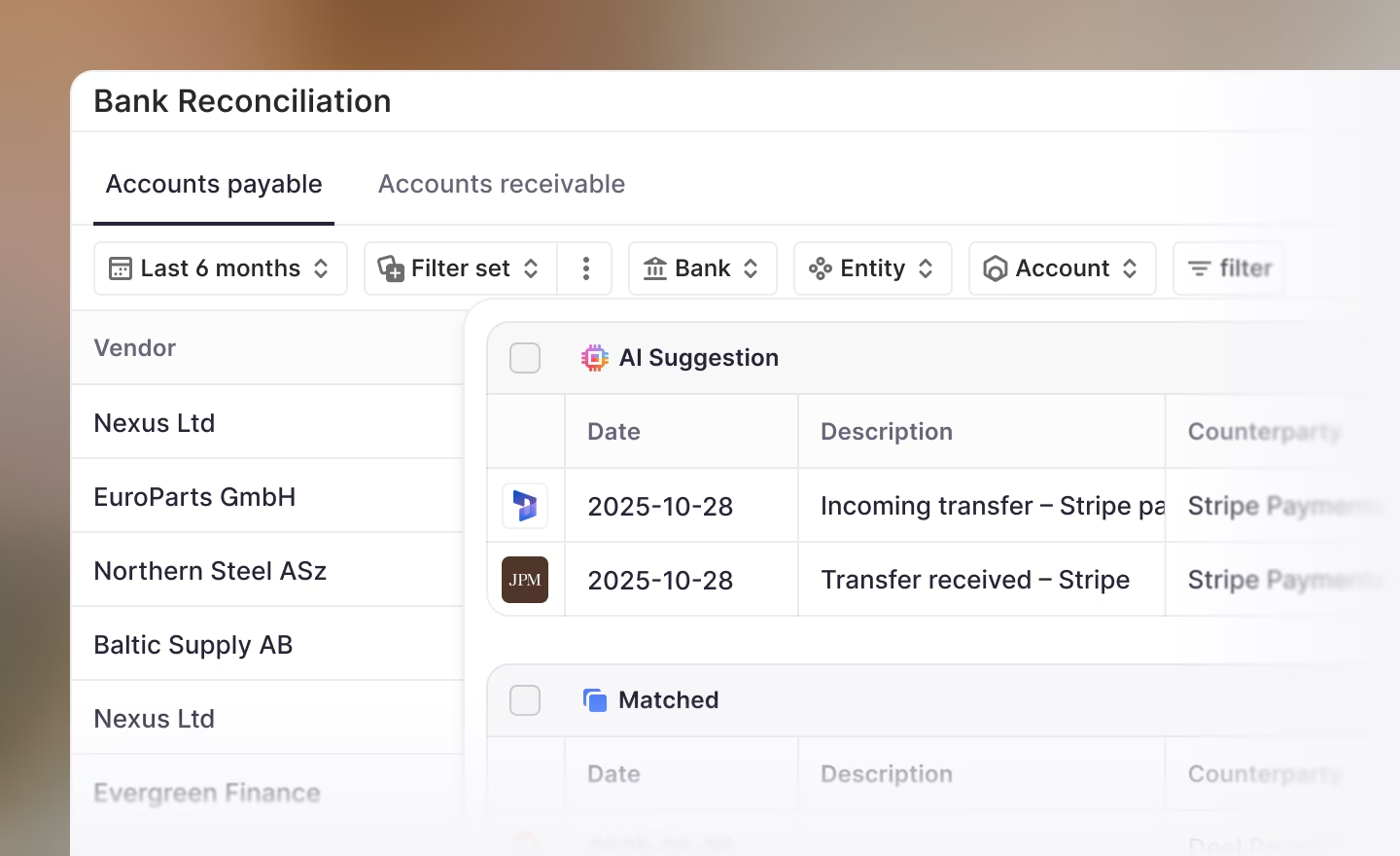
Since Atlar introduced bank reconciliation earlier this year, we've been refining its AI matching engine alongside the customers using it. It now runs on NetSuite and Microsoft Dynamics 365, where finance teams at companies like Aiven and Kilo use it to reconcile multi-currency accounts across banks and entities.
The matching engine clears the vast majority of transactions automatically, and reconciliation agents, rolling out now, take on the rest.
The difference makers: data and payments
Reconciliation tools increasingly sell themselves on AI, alongside a polished interface and flexible matching rules. But even the best AI can only match the data it's given, and most tools get their bank data from third-party aggregators. Statements can arrive late or incomplete, and no matching engine can recover remittance details a statement never contained. Atlar builds and maintains its own bank connections in over 100 countries, so every statement comes straight from the bank, complete.
Standalone reconciliation tools only see a transaction after the fact, and have to work out what it was from records produced by other systems. When a payment goes out through Atlar, the platform already knows who it went to, what it settled, and how to book it, so the entry is ready to post as soon as the statement line lands.
From statement line to posted entry
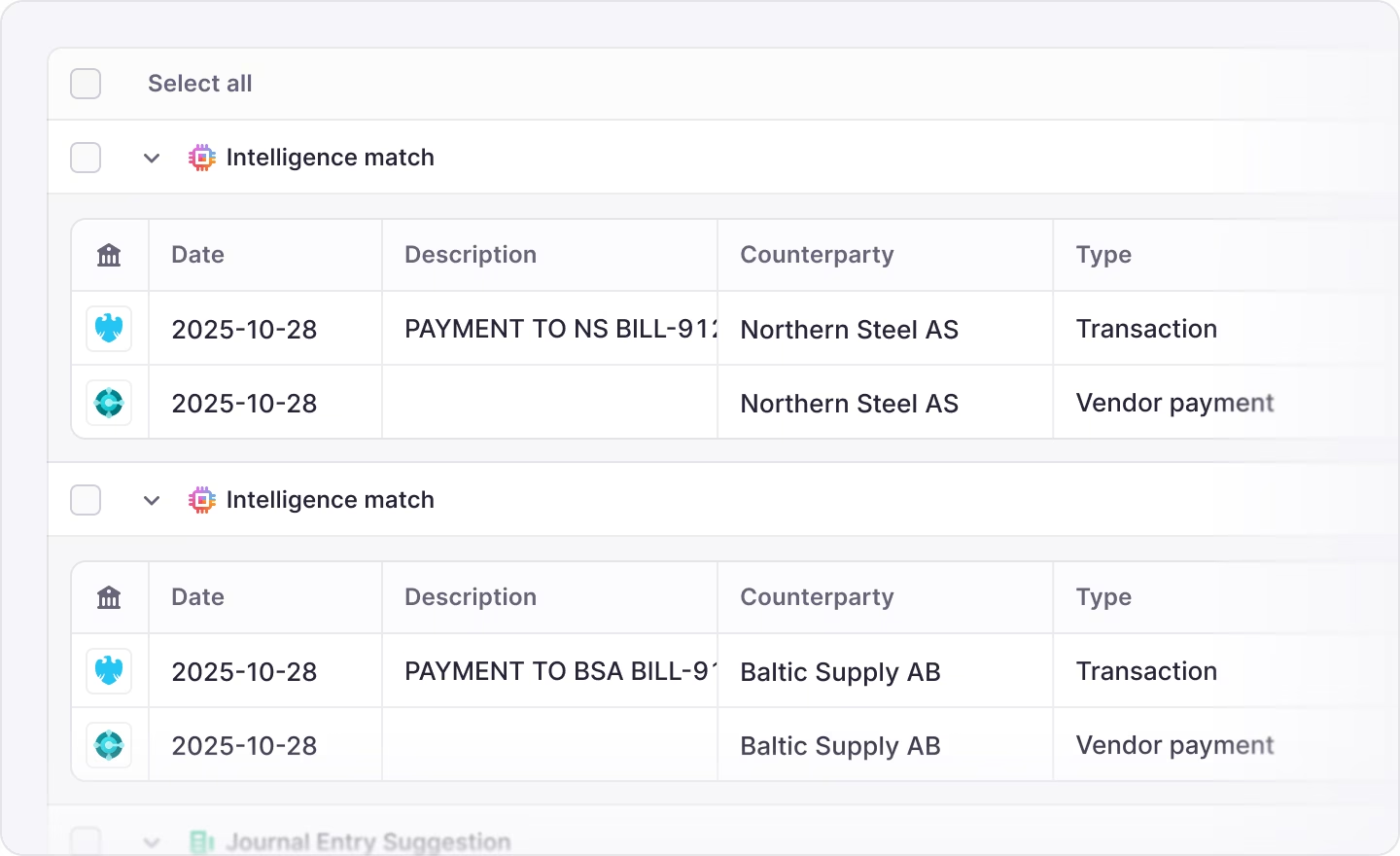
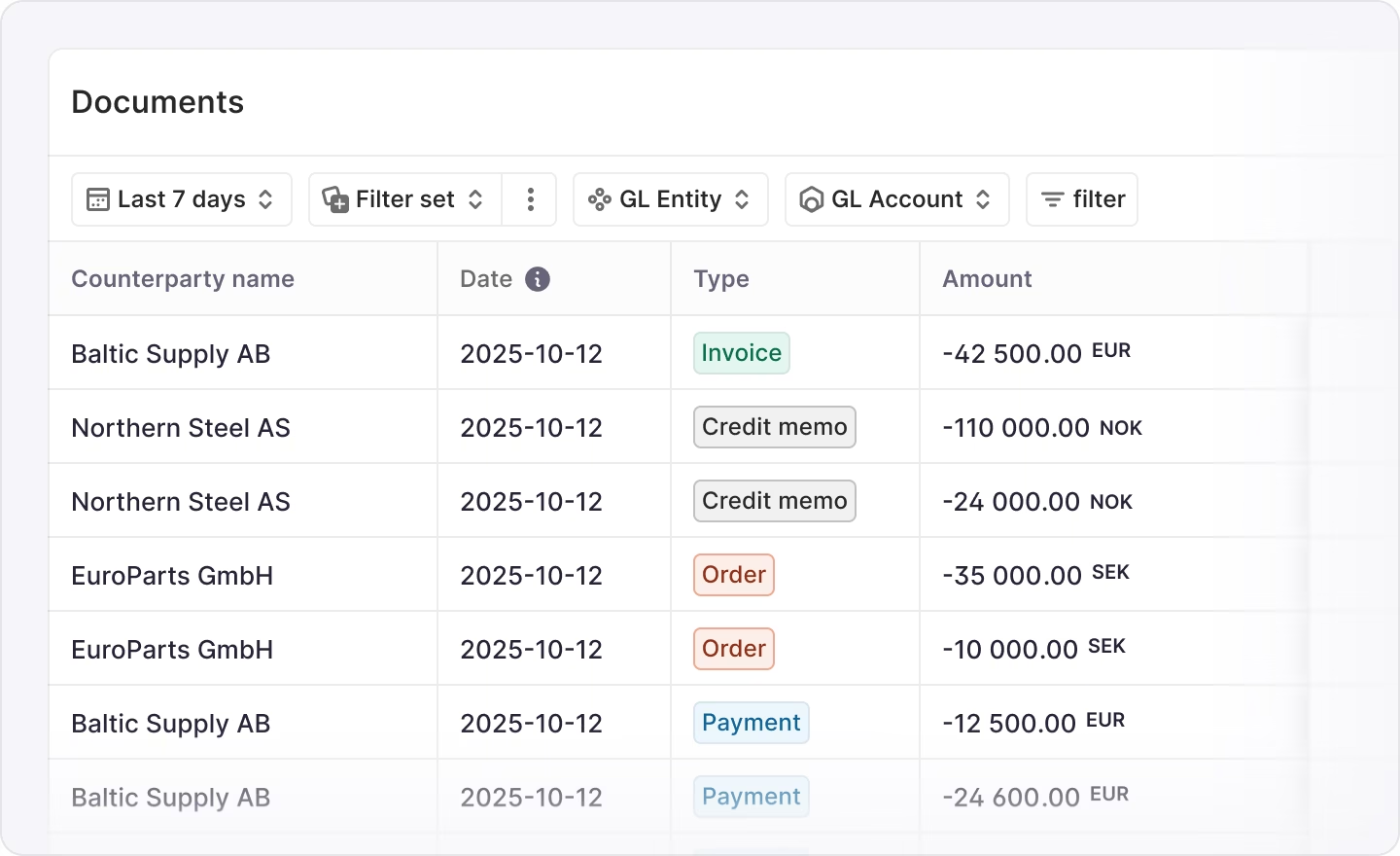
Every line on the bank statement is checked against the open items in the ERP (the invoices, bills, and payments still waiting to be matched). In practice:
- AI matching works from day one, before any rule is set up. It weighs every signal at once, so one messy field, like a garbled reference, doesn't stop a match.
- Items with no matching document, like bank fees, interest, and internal transfers, are posted by rules written in plain language, with the right GL account and dimensions already attached.
- When a US dollar invoice is paid from a euro account, the amounts won't match because they're in different currencies. Atlar matches them anyway and applies the rate the bank actually used.
- Confirmed matches post back to the ERP, and anything unmatched waits in its own view so nothing is missed.
- Nothing reaches the books without a person confirming it, and every match stays traceable for audit.
Teams close faster and with far less manual work. Audits get simpler when every entry is coded the same way, and with most of the matching automated, reconciliation scales with the business rather than the size of the team.
AI agents that learn how your team reconciles
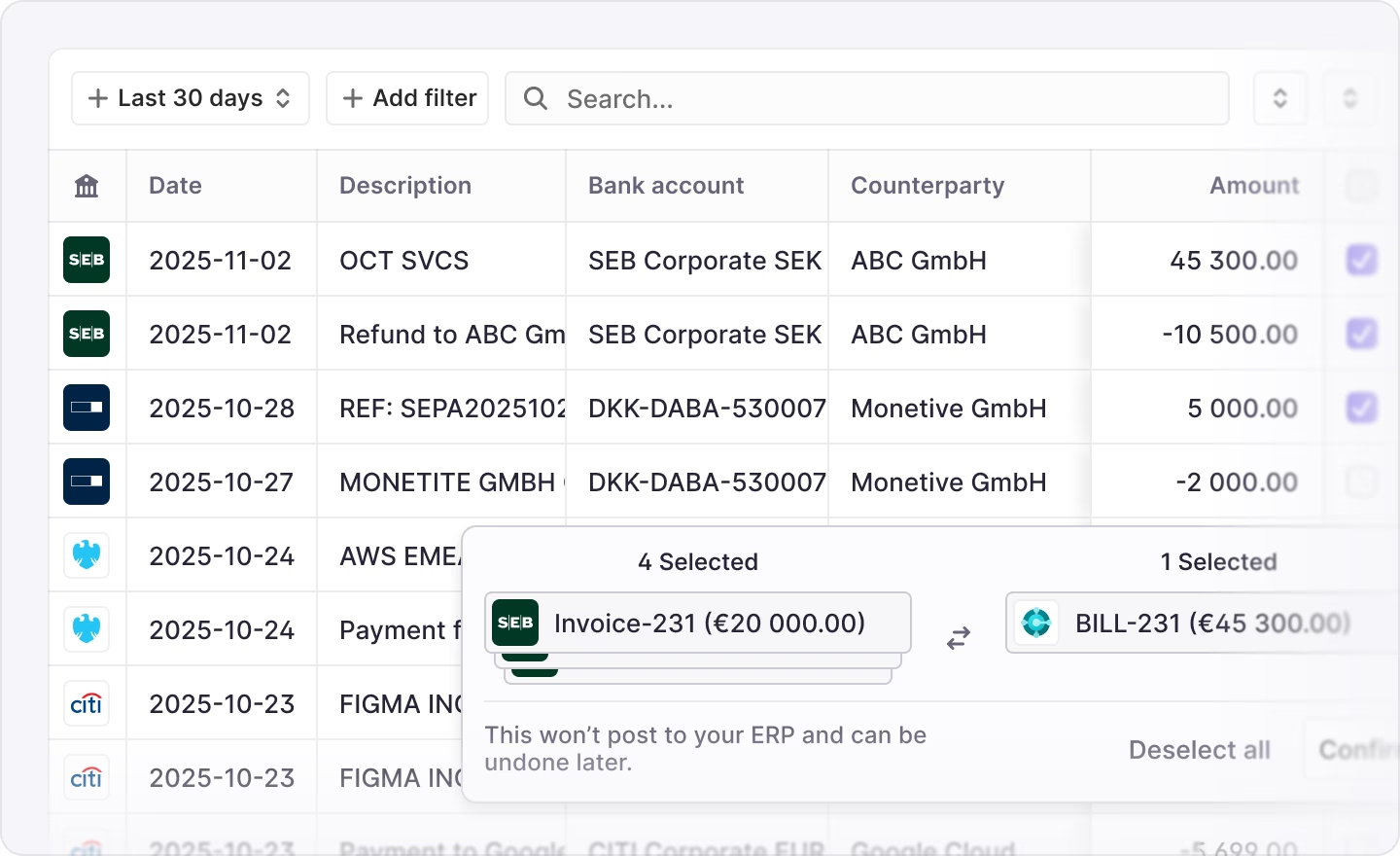
Atlar's matching agent works through whatever the rules and AI matching leave outstanding and proposes matches, each with a short note on why the items belong together. As the agent learns from what your team approves and rejects, it starts handling cases that need a new entry, such as fees deducted from a payment, FX differences, and partial payments.
A separate rule agent looks for matches people keep making by hand and suggests rules to automate them. Each suggestion comes with a test against past transactions, and no rule goes live until someone switches it on.
As Joel Wägmark, Co-founder and CPO at Atlar, puts it:
“Every approval or rejection teaches the agents something, and over time the patterns they find become simple, predictable rules.”
Getting reconciliation live
Every reconciliation tool needs your banks and ERP connected before it can match anything. Atlar customers go live in under 90 days on average, and one set of connections runs cash management, payments, and forecasting as well as reconciliation. Teams already on Atlar can add reconciliation without connecting anything new. Reconciliation on Workday and Atlar's other ERP integrations is coming next.
If you'd like to see bank reconciliation in Atlar for yourself, request a demo or get in touch with our team.