Key takeaways
- Jayasree Suresh at Storytel has streamlined treasury reporting by utilizing Atlar's connector with Claude, reducing report preparation time significantly.
- AI in treasury is most effective when connected to live data, allowing finance teams to create real-time reports and models rather than relying on outdated spreadsheets.
- Atlar's connector enables direct access to banking data while allowing preset permissions for data access and actions, promoting secure automation in treasury processes.
- Storytel's treasury tools include a cash monitoring agent and a working capital model that enhance financial planning and analysis, showcasing the integration of AI in everyday operations.
New treasury tools have usually meant a long implementation project or a place in another team's backlog. Jayasree Suresh, Treasury Manager at Nasdaq-listed Storytel, builds hers in Claude, working from the company's live treasury data through Atlar's connector.
The monthly treasury report she used to rebuild by hand now takes a few hours instead of a couple of days. She has since added a cash monitoring agent and a working capital model that her finance colleagues use too. Storytel's banks and NetSuite were already connected to Atlar, so she could start building without an implementation project.
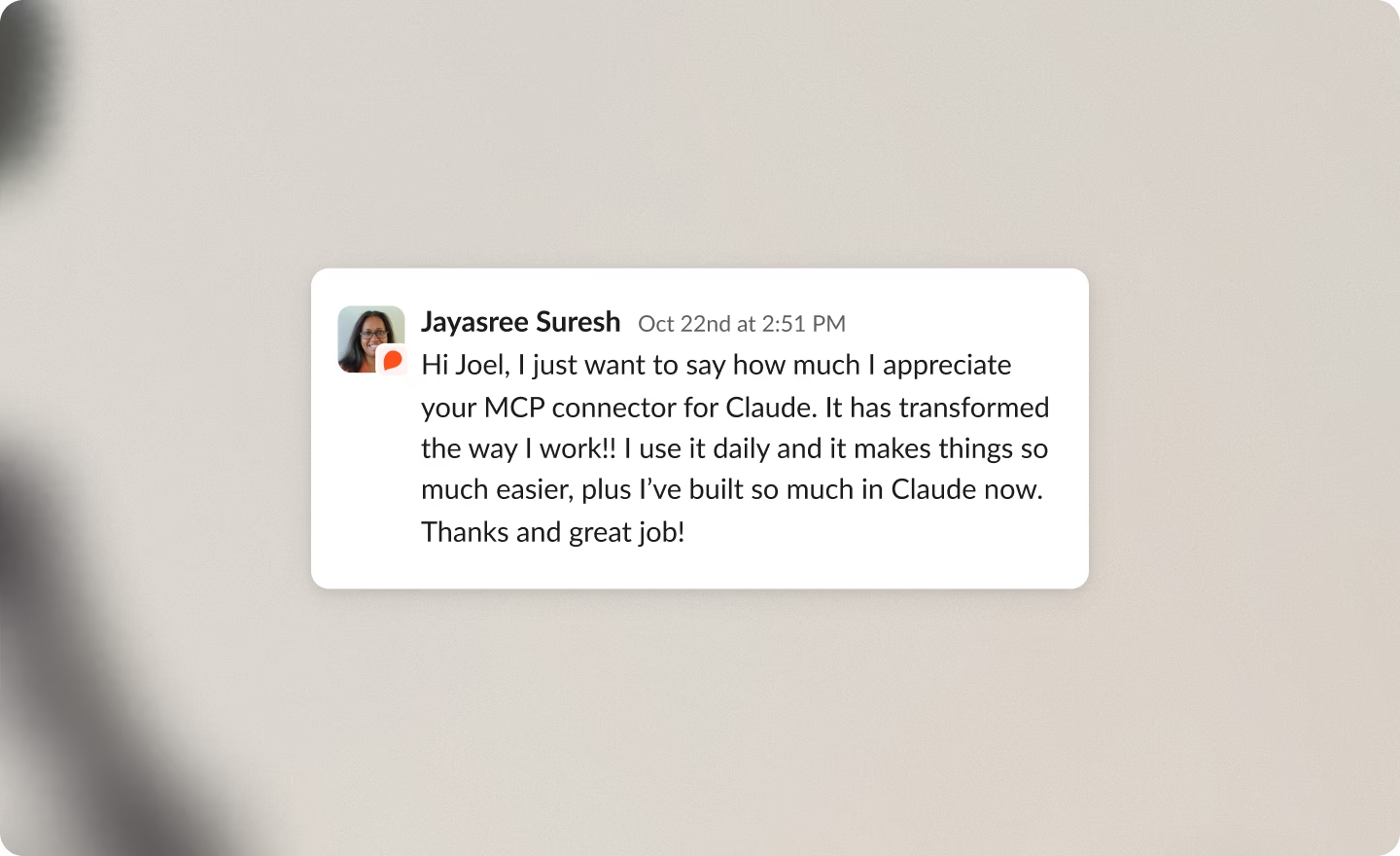
As Jayasree puts it:
“Atlar's connector with Claude has transformed the way I work. Claude gets our live numbers directly from Atlar, so I spend far less time pulling reports together and can focus on the analysis. I use it every day, and I've built so much in Claude already.”
What AI needs before finance can rely on it
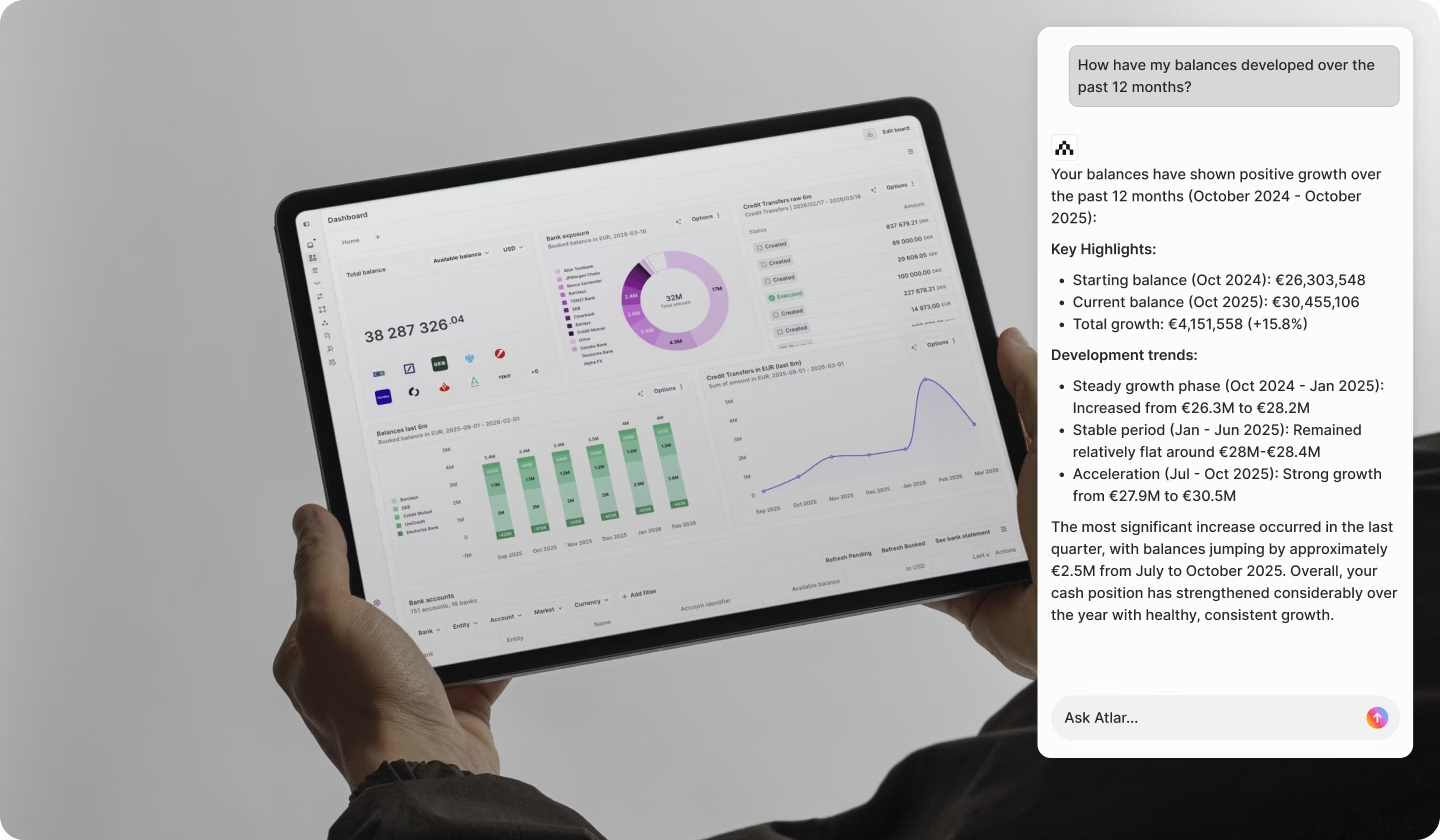
AI is already changing how finance teams work, but in treasury its value depends on what it can reach. A model can produce a deck or a forecast from whatever it's given, and too often that means bank portal exports and pasted spreadsheets that are out of date by the time anyone asks a question. To be trusted with treasury work, an AI model needs live data it can query directly, tools to act on that data, and controls over what it can see and do.
Finance teams that have connected an AI assistant to live, permissioned data are already building their own reports, checks, and models, and Atlar customers keep sharing new examples with us.
What Storytel's treasury manager built in Claude
Storytel is one of the world's largest audiobook and e-book streaming services, with more than 2.7 million subscribers in over 25 markets. Its monthly treasury report covers cash, debt and covenants, net financial items, and cash flow against forecast. Jayasree turned it into a Claude skill that assembles the deck in Storytel's own template with figures pulled straight from Atlar. She then adds the remaining files and reviews the result.
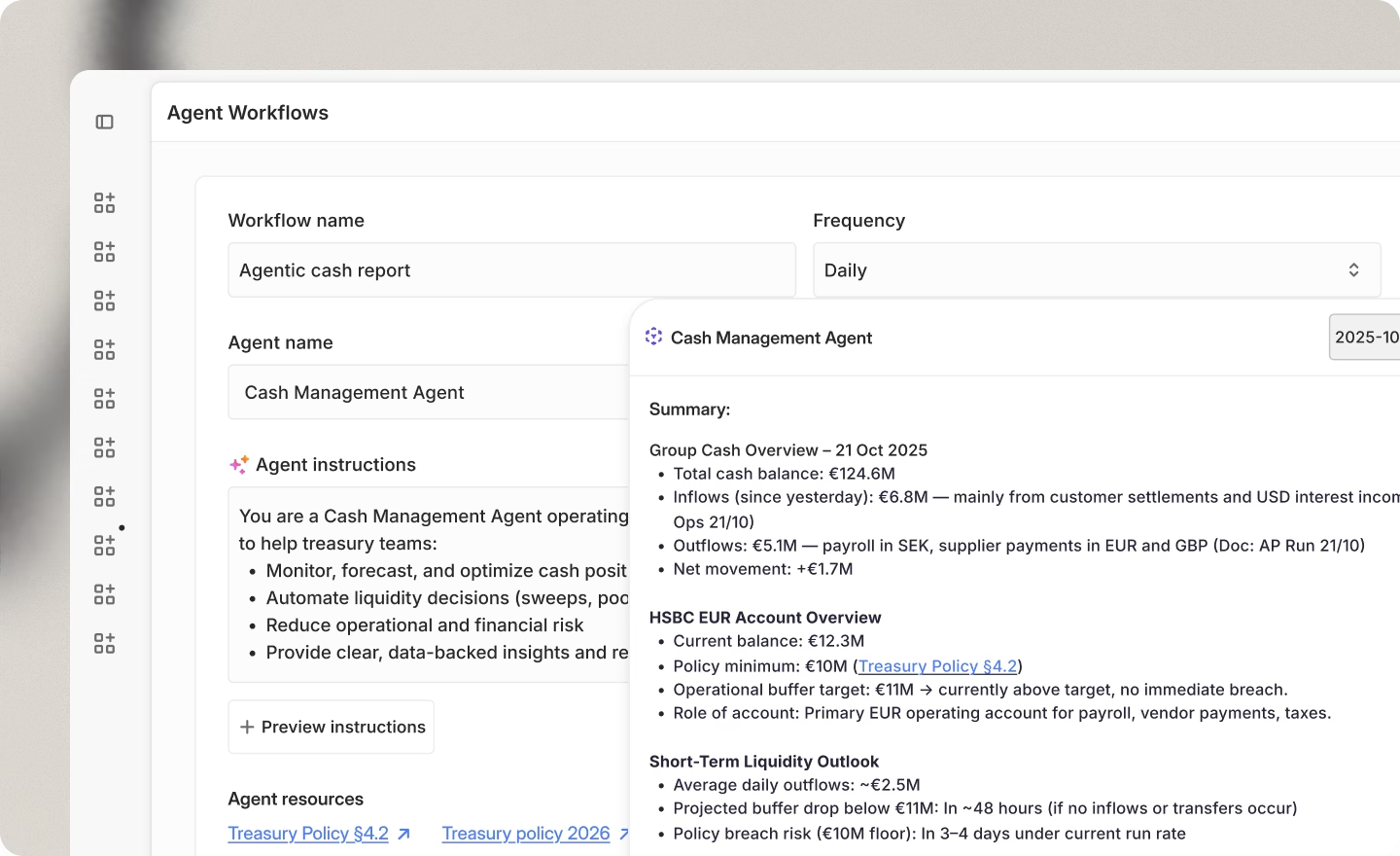
Every day, her monitoring agent checks the balances on the accounts Storytel pays from and reads the trade documents in her inbox to estimate upcoming outflows. When an account needs topping up, it drafts an email for Jayasree to send to accounts payable, asking them to move cash across from another bank before the outflows are due.
Her working capital model pairs historical data with forecast scenarios and is shared with Storytel's business control team, which handles financial planning and analysis. The business controllers have built a second model from actuals, and comparing the two will show how well Claude forecasts. Claude has also turned Storytel's treasury processes and backup documentation, once kept in Excel and Word files, into a visual guide the wider team can follow.
Built on Atlar's own bank connections
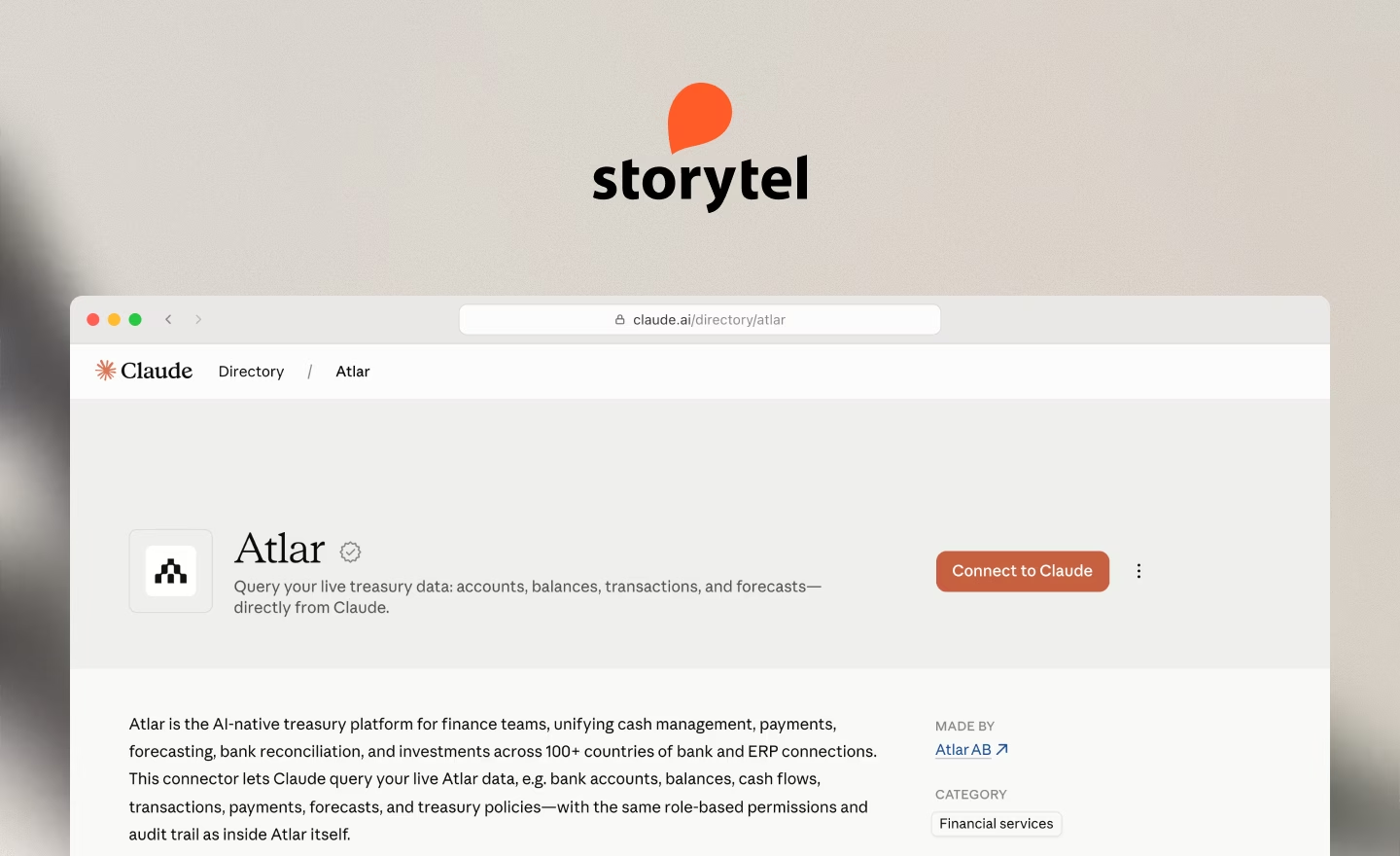
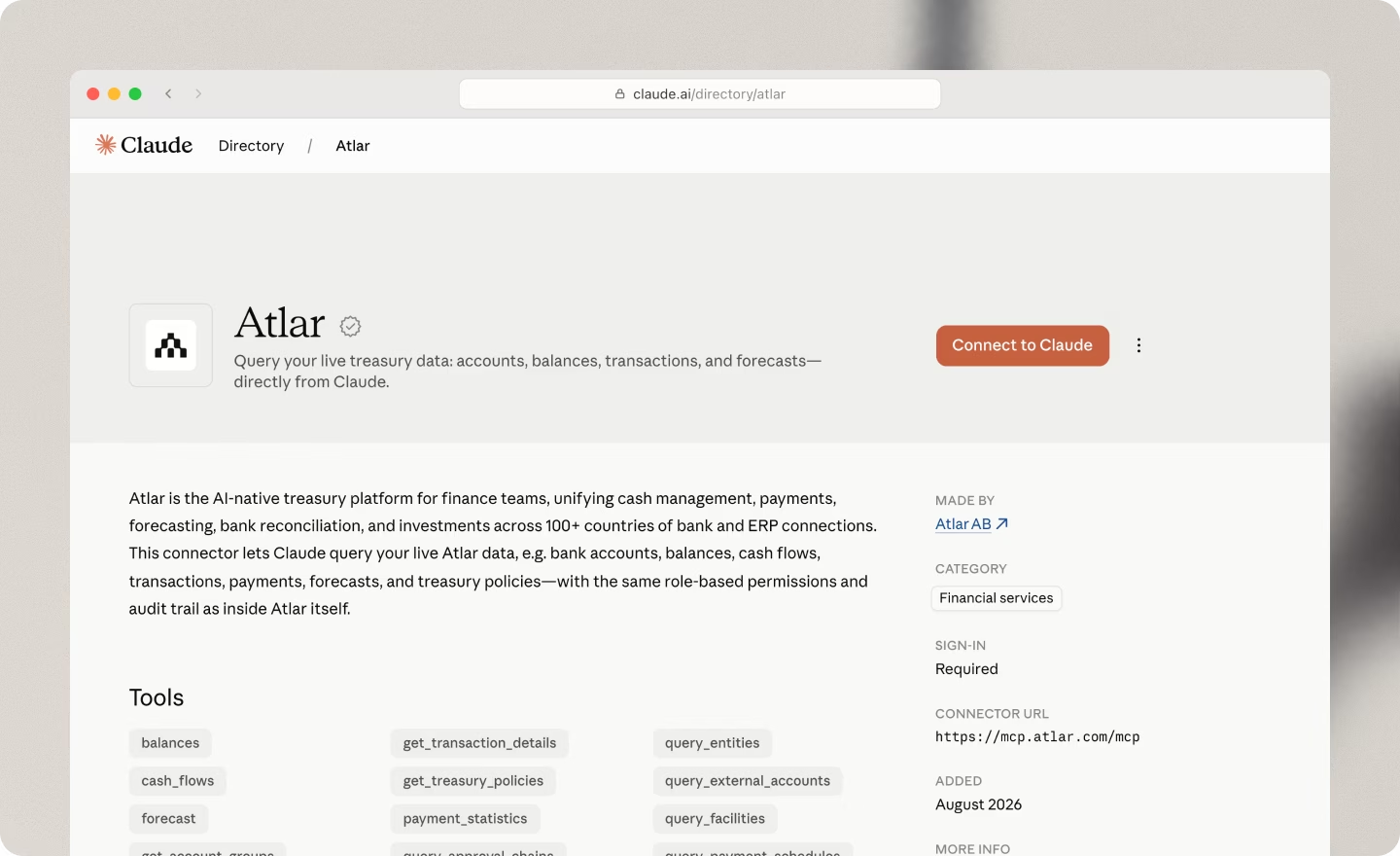
Atlar's connector is built on the Model Context Protocol (MCP) and works with Claude, ChatGPT, and other AI assistants. When Claude asks for a balance, the answer comes from bank connections Atlar builds and maintains itself, with no third-party aggregator in between. Atlar covers banks in over 100 countries and handles more than €450 billion in annualized transaction volume.
The connector stays off until an admin enables it, and admins choose whether AI tools can only read data or also take actions, always within each user's permissions. Storytel chose read-only access, which lets Claude see what Jayasree can see without changing anything, and every query is logged in Atlar's audit trail.
Jayasree adds:
“I always check the numbers against the source files before anything goes out. I've also told Claude never to guess, so if some data is missing, it has to ask me.”
Agentic workflows inside Atlar
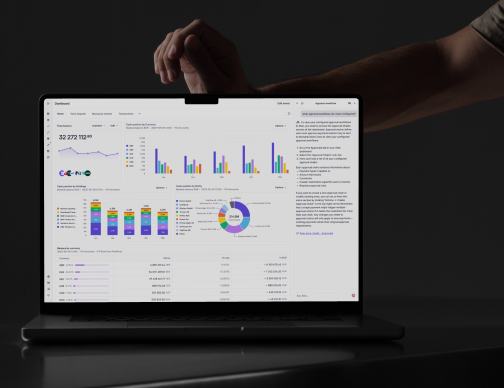
Atlar Intelligence brings agentic workflows to the bank and ERP data Atlar already holds for each customer. Each workflow runs on a schedule and checks its steps against the company's treasury policy before recommending an action for someone to approve. Skills capture a team's own formats and instructions, much as Jayasree's skill does for Storytel's monthly report.
A workflow could, for example, compare payment account balances each morning with expected outflows and prepare the funding transfer for approval. Teams can also start workflows from Claude or ChatGPT through the connector. And Atlar was the first platform to give AI agents access to banking data through J.P. Morgan Payments' new API, with Lovable as the launch customer.
Getting started with Atlar in Claude
Setting up the connector takes a couple of clicks from Claude's connector directory, and teams can try it on an Atlar demo account before connecting their own. The setup guide covers admin settings and access levels.
AI-first companies like Lovable and Parloa choose Atlar for their treasury, as do publicly listed companies such as Storytel, Acast, Bandwidth, and Truecaller. To see what your team could build, request a demo or get in touch with our team.