Key takeaways
- High interest rates raise the cost of mistimed payments, whether the opportunity cost of paying early or the real cost of funding late, while cross-border activity adds FX exposure and fraud risk.
- AFP's 2022 Digital Payments Survey found that 71% of finance professionals cite lack of standardisation across bank portals and formats as a top operational pain point, and 60% cite difficulty gaining real-time visibility into outbound cash flows.
- Treasury-led payments typically include centralised approval workflows, rule-based payment routing, integration with forecasts and cash positioning, and direct bank connectivity.
- Aiven uses Atlar to manage approvals centrally across more than 15 legal entities while giving each entity control over timing; Storytel saves over 20 hours a week on AP after integrating NetSuite with their banks through Atlar.
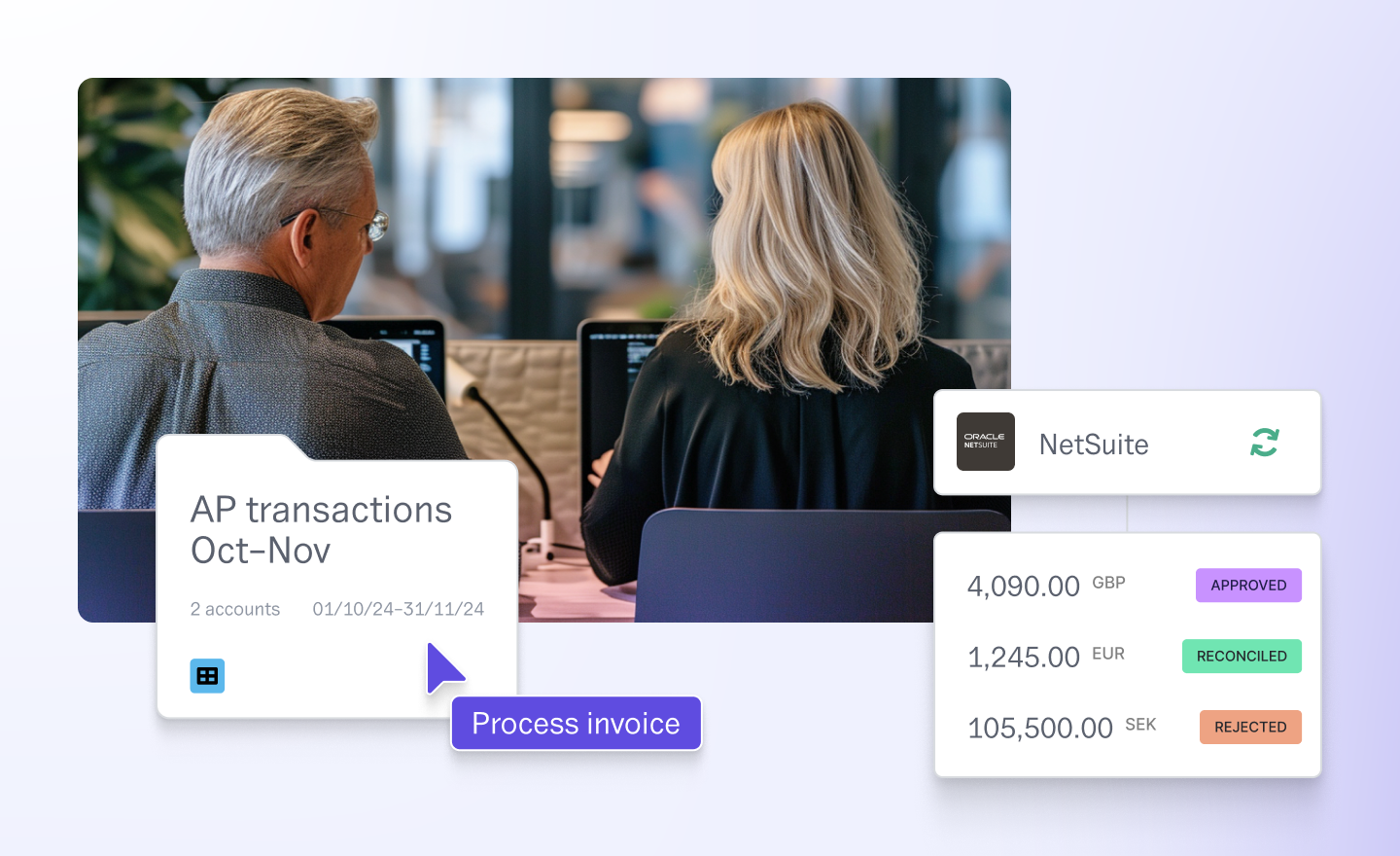
- Atlar integrates with NetSuite, SAP S/4HANA, Workday, and Dynamics 365 Business Central, with the Dynamics app live on Microsoft's AppSource marketplace.
As finance complexity increases, so does the pressure to move money with speed, control — and fewer surprises.
High interest rates mean the cost of mistimed payments is rising — whether it's the opportunity cost of paying early or the real cost of funding late. Meanwhile, increased cross-border activity introduces more FX exposure, and internal controls are under greater scrutiny as fraud risk climbs.
In this context, manual uploads, fragmented bank portals, and asynchronous approvals aren’t just inefficient — they’re costly and risky. More teams are recognising that the cracks aren’t forming — they’re already there.
Payments have become a strategic lever
With rates still high and working capital under pressure, treasury teams are being asked to manage outflows more precisely. Poorly timed payments — even by a day — can result in financing costs, lost yield, or strained supplier relationships.
Still, many teams rely on processes built for a different era: disconnected AP workflows, legacy systems, and fragmented bank access. Even with modern ERPs, it can be difficult for treasury to adjust payment timing or track status without friction.
This isn't just operational overhead. As covered in a previous post, liquidity planning depends on real-time visibility — and payments play a central role. When timing slips or visibility lags, it undermines the broader cash strategy. That's why treasury is stepping in — to make payments part of a broader cash strategy.

The old model isn’t built for today’s needs
In many organisations, the traditional payment setup looks like this:
- AP owns execution and manually uploads payment files via bank portals, often without central oversight.
- The ERP governs rules like due dates and approvals, but can’t adapt to treasury’s evolving needs without costly customisation.
- Bank access is siloed by entity or geography, which fragments control and slows response times.
This setup might have worked when companies operated in one country, with one bank, and a small finance team. But for businesses managing multiple entities, currencies, and banking relationships, it quickly breaks down.
According to AFP’s 2022 Digital Payments Survey, 71% of finance professionals say lack of standardisation across bank portals and formats remains a top operational pain point. And 60% cite difficulty gaining real-time visibility into outbound cash flows.
The result? Delays, errors, compliance risk — and no consolidated view of what’s going out, when, or why. It’s not just inefficient. It’s risky.
Treasury-led payments: what it looks like
Modern treasury teams aren’t just overseeing payments — they’re designing the process. Aiven, for example, has over 15 legal entities and uses Atlar to manage approvals centrally while giving each entity control over timing — enabling both oversight and flexibility.
Here’s what treasury-led payments typically look like:
- Centralised approval workflows: Treasury sets global rules, while local teams retain operational control. This reduces risk without adding friction.
- Rule-based payment routing: Payments are routed automatically by amount, counterparty, urgency, or currency — speeding up execution and reducing errors.
- Integration with forecasts and positioning: Payment runs are tied directly to short-term cash planning, improving accuracy and readiness.
- Direct bank connectivity: Atlar connects directly to multiple banks, eliminating file uploads and manual updates. Storytel, for example, uses Atlar to integrate NetSuite with their banks — saving over 20 hours a week on AP and gaining real-time visibility into payment status.
This gives treasury a live, unified view of outbound flows — and the control to act on them when it matters.

Why this shift matters now
Treasury’s growing role in payments reflects how execution is now tied directly to financial outcomes:
- Higher rates mean higher costs: Paying early or holding cash in the wrong place has real consequences. Our AP payments guide covers this in more detail.
- Cross-border complexity is rising: Volatile FX markets and compliance obligations demand precision.
- Fraud risk is real: Inconsistent approvals and disconnected systems leave gaps.
- Forecasting depends on visibility: Treasury can’t plan liquidity if it doesn’t know what’s leaving the business. For more on this, read our forecasting deep-dive.
Controlling payments isn’t just process improvement. It’s a key part of how treasury steers the business.

Why this matters more in 2025
Liquidity planning isn’t just a treasury concern right now — it’s a company-wide priority. If the cost of capital is rising, financing is harder to secure, and counterparties are facing financial stress, knowing your position week to week becomes a competitive advantage.
Forecasting is the foundation. Get that right, and you’re in a much stronger place to respond to whatever comes next.
How Atlar supports treasury-led payments
Atlar gives treasury and finance teams the tools to manage payments centrally across banks, ERPs, and entities — with full visibility and control. Key capabilities include payment scheduling, built-in approval chains, audit trails, real-time status tracking, and more.
We integrate directly with systems like NetSuite (via our certified SuiteApp), SAP S/4HANA, Workday, and Dynamics 365 Business Central — our Dynamics app is, in fact, now live on Microsoft’s AppSource marketplace, making deployment smoother for IT and finance teams.
If you’re interested in learning more, explore our payments features or book a demo to see how it works in practice.