Key takeaways
- Neko Health, the preventive health company co-founded by Daniel Ek, manages its intercompany loans in Atlar alongside its cash and payments, and puts the time saved at 2 days per month.
- Atlar's AI agent reads a loan agreement and drafts the loan or facility with the amount, rate, schedule, and fees filled in. Nothing is created until someone reviews and approves it.
- Scheduled workflows can review the debt book each morning, flag rate resets, maturities, and tight facility headroom, and track limits from the company's treasury policy against live debt and cash data.
- Every loan sits next to the live bank balances it's drawn from and repaid into, and interest and principal are paid through the same approval chains as every other payment.
- Debt management is available now to all Atlar customers, for intercompany loans, term loans, and revolving credit facilities. Teams already on Atlar, like Neko, can start without an implementation project.
We launched debt management earlier this year, and it's now used for everything from intercompany loans to external facilities worth hundreds of millions. More and more of the work is done by AI agents, which can read the loan agreement, set up the loan, and keep an eye on it once it's live.
Few of the companies using it are growing as fast as Neko Health. The preventive health company, co-founded by Spotify's Daniel Ek, has scanned more than 100,000 members in Sweden and the UK. In July, it raised a $700 million Series C, and in September it opened its first US clinic in New York.

Neko now manages its intercompany loans in Atlar, next to the cash and payments its treasury team already runs. The team puts the time saved at 2 days per month, with fewer discrepancies to chase at month-end. And because Neko connected its banks and ERP to Atlar in under two months last year, debt management went live with no implementation project.
Mahmoud Iskandarani, Head of Treasury at Neko Health, says:
“We used to keep our intercompany loans in a spreadsheet and recalculate the interest by hand. With every new market adding entities and money moving between them, that wasn't going to last. We save time every week, but what really matters is having a setup that scales with us.”
AI agents for the debt book
Setting up a loan starts with the agreement. Upload it, or paste in the text, and Atlar's AI agent drafts the loan or facility with the amount, rate, schedule, and fees filled in. It can log drawdowns and repayments too, or set up a custom benchmark rate for internal group funding. Nothing is created until someone reviews and approves it.
Once the loans are set up, the team can ask the agent about them in plain language, such as which loans reset in the next 30 days. With the company's treasury policy uploaded, the agent also tracks limits like a maximum leverage ratio or facility utilization cap against live debt and cash data.
Workflows put agents on a schedule. Each morning, an agent can review the debt book, flag upcoming rate resets, maturities, and tight facility headroom, and draft loan activity for any repayments it spots in bank transactions. Every action stays within the user's permissions and is logged.
What it takes to automate debt
In many finance teams, loan terms sit in a spreadsheet or debt register, repayments go out through a bank portal, and someone updates the loan record afterward. An agent can't automate that while the loan and the money live in different systems.
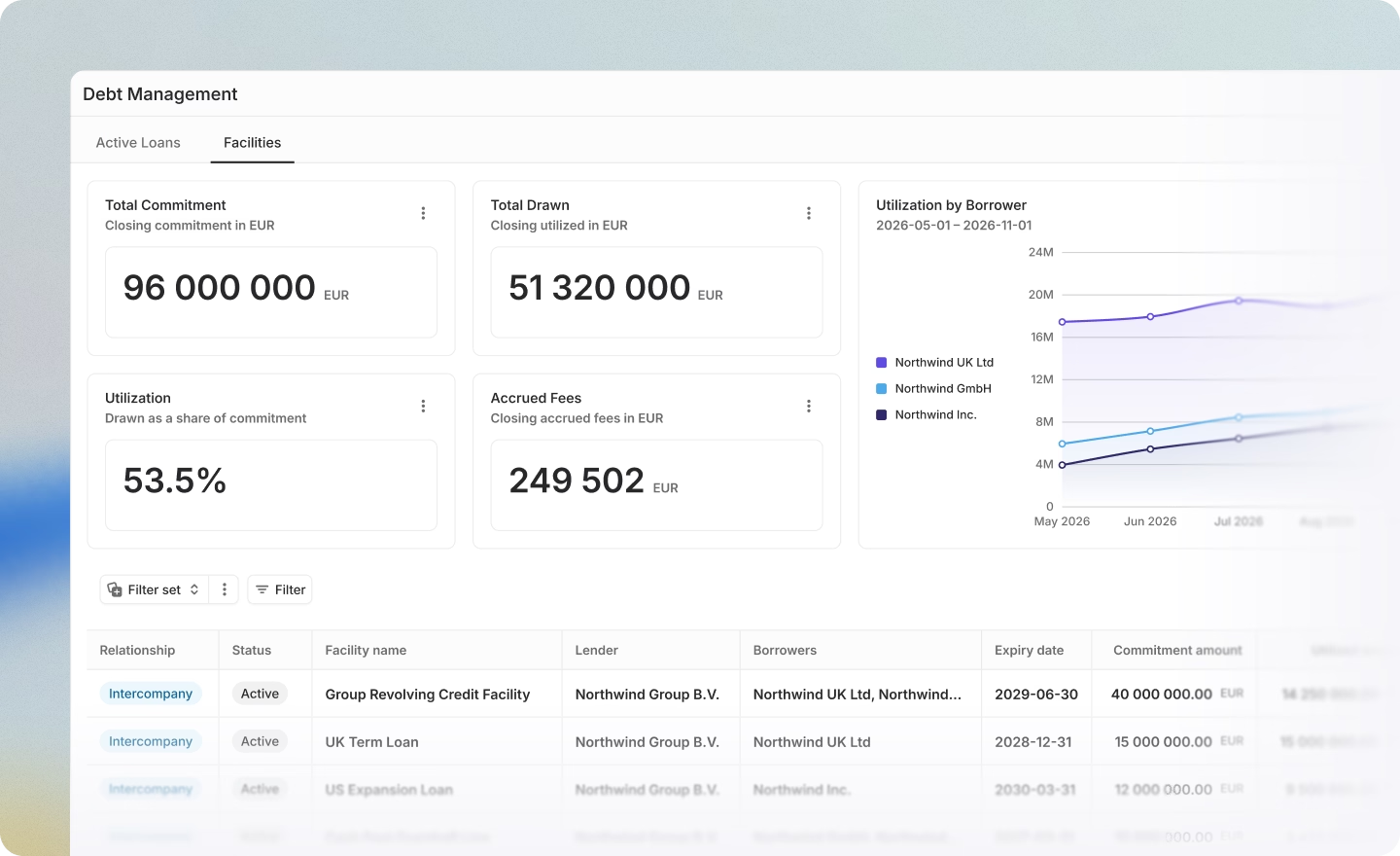
In Atlar, debt management is built on the bank connections behind cash management, across banks in over 100 countries. Every loan sits next to the live balances it's drawn from and repaid into. Repayments, interest, and drawdowns flow into the cash position and forecast automatically.
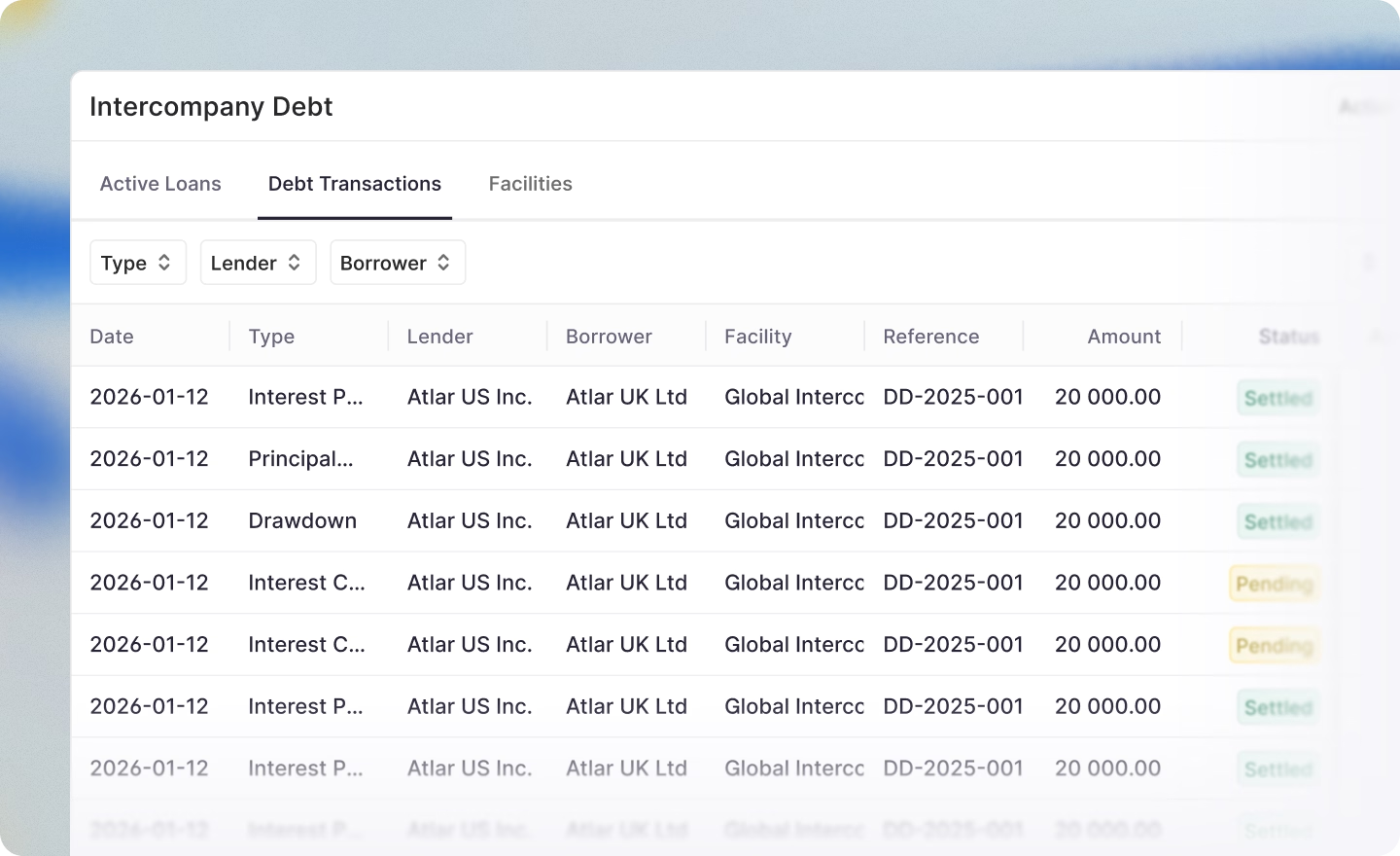
Interest and principal are paid from Atlar too, through the approval chains used for every other payment. Each payment or bank transaction is linked to the schedule it settles, so the loan record reflects what was actually paid.
Mahmoud adds:
“Where we're heading is end-to-end automation, from tracking the loans to making the payments to booking the entries in our ERP. With our cash and payments already running in Atlar, that's a realistic next step for us.”
That's where the product is headed. Scheduled repayments and interest will soon create payments automatically, ready for approval. Sweeps between entities will register as drawdowns on the loan behind them, and interest will post directly to the ERP.
From intercompany loans to external facilities
Neko uses debt management for intercompany lending. The same module handles external term loans and revolving credit facilities, including loans the company makes to outside borrowers, and keeps net debt current across all of them. Teams can:
- Register a facility once and reuse its terms for every drawdown.
- See outstanding principal and accrued interest for each loan, and drawn and available capacity for each facility.
- Handle fixed and floating rates, with daily benchmark updates for EURIBOR, SOFR, €STR, and SONIA.
- Track interest and principal due dates, with flags for anything overdue or missing a rate fixing.
- Keep a full audit trail of every drawdown, rate change, and repayment.
Interest rate swaps, bonds, and covenant-linked pricing will follow, along with more benchmark rates, including STIBOR, NIBOR, and CIBOR.

Getting debt management live
Debt management is available now to all Atlar customers. Teams already on Atlar can start right away and bring in existing loans with their current balances, without recreating their history. New customers go live in under 90 days on average, and the same connections then run cash management, payments, forecasting, and reconciliation, not debt management on its own.
Fast-growing tech companies like Neko Health, Lovable, and Parloa trust Atlar with their treasury, alongside established, regulated businesses like Bandwidth, Mangopay, and Tide. If you'd like to see debt management in Atlar for yourself, request a demo or get in touch with our team.