Bank Connectivity for Workday: What Finance Teams Need to Know
Workday's appeal is straightforward. HR, finance, and planning sit on one cloud-native platform with a shared data model, which spares teams the usual ERP archaeology of bolt-ons and middleware. That holds across most of the finance function, but it breaks down at the bank.
For treasury teams running Workday Financial Management, bank connectivity is still mostly manual: balances scattered across separate portals, statements arriving in whatever format each bank decided on years ago and imported by hand, payment files exported from Workday and uploaded to each banking partner one at a time.
So the finance stack is cloud-native everywhere except the part where money actually moves.
Why the bank is the blind spot
Workday has put real effort into bank connectivity, both directly and through marketplace partners, and for teams running a handful of banks in one region the product page is largely accurate.
For teams running more banks in more places, the gap shows up quickly. Different banks use different protocols, and onboarding a new partner means another configuration project. Someone — usually a finance person who didn't sign up to be a format engineer — ends up owning ISO 20022, BAI2, and whichever proprietary CSVs the banks involved happen to prefer. The plumbing gets brittle as accounts and entities pile on.
This isn't really a Workday problem, every ERP has it. It stands out more in Workday environments because the rest of the experience is so unified, and the bank is where that feeling falls apart.
What a dedicated connectivity layer changes
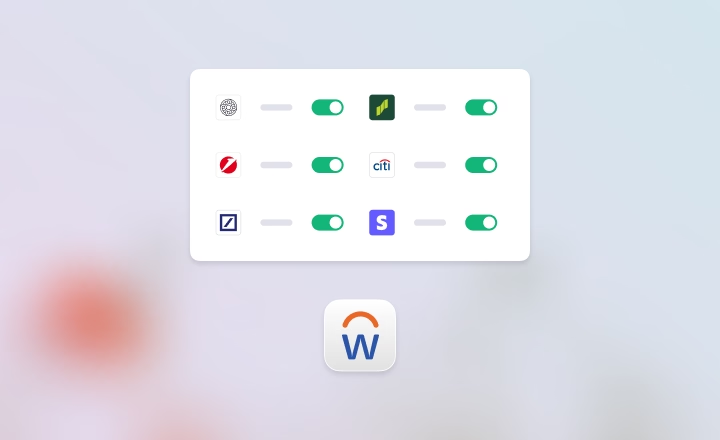
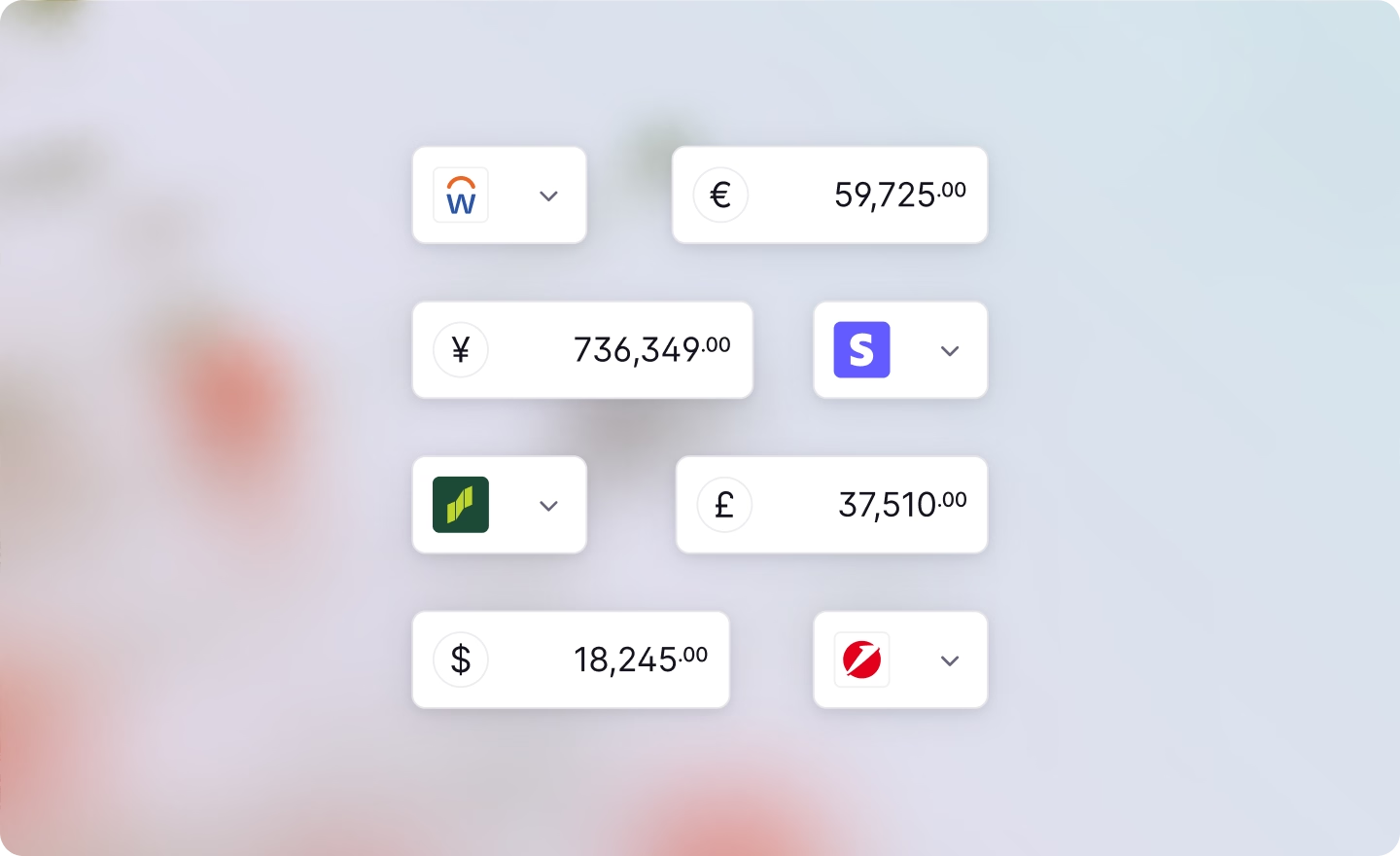
The fix is to put a purpose-built layer between Workday and your banks, one that takes on the connectivity, formats, and data normalization and hands clean data back to the ERP. A few practical things change once that's in place.
Cash visibility stops requiring five browser tabs. When bank data feeds into your finance platform in real time, you don't start the morning logging into one portal after another to piece together a cash position. Balances by account and entity are already current and consolidated, ready for whatever decision is on the table that day: a funding call, a short-term investment, an intercompany transfer.
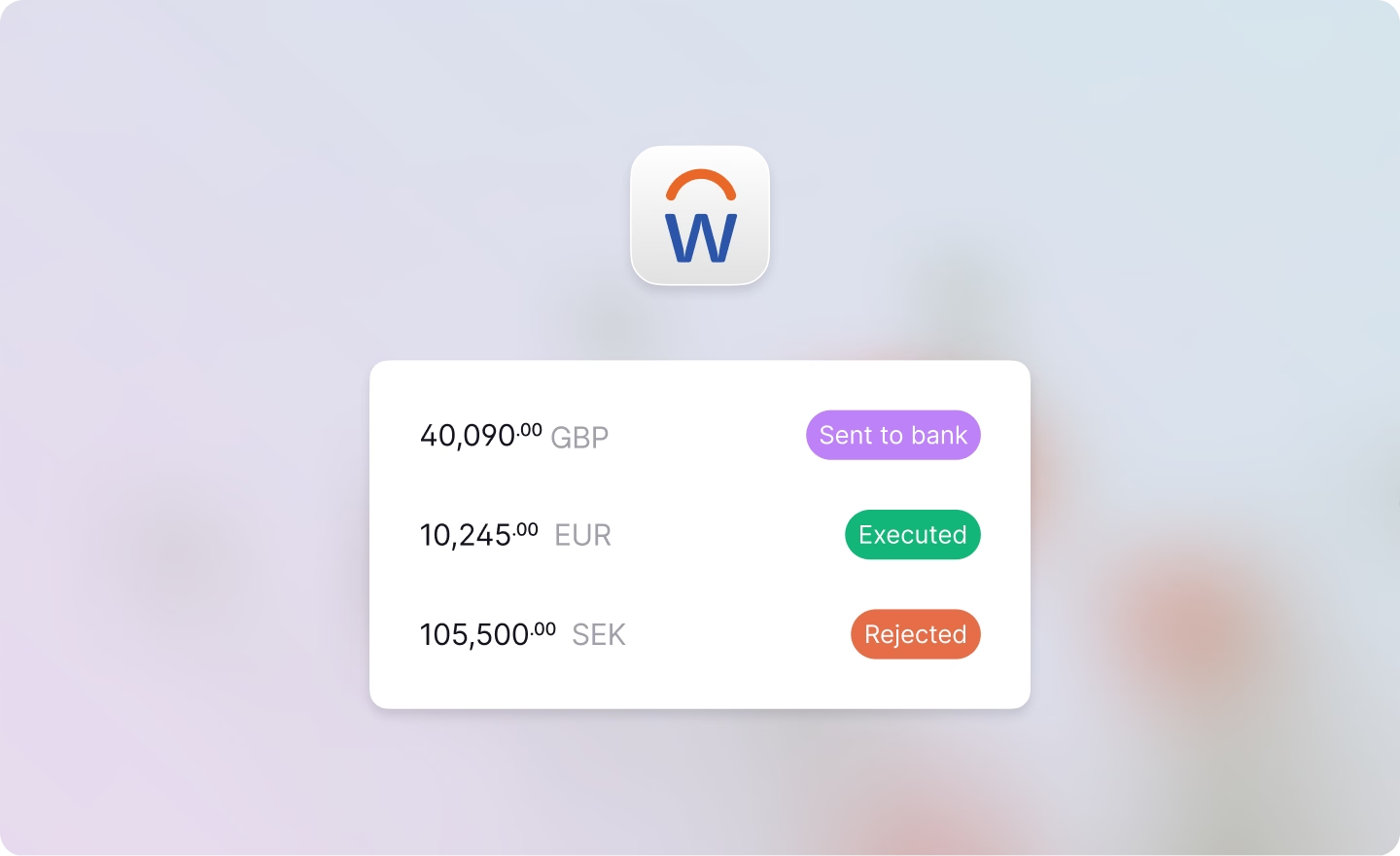
Payments no longer involve exports and uploads. Instructions leave Workday and reach the bank without anyone exporting a file or signing into a portal, and confirmations come back on their own. Approval chains and supplier records stay where they are inside Workday; only the bank-facing piece moves.
Reconciliation no longer waits for close. A live statement feed means you can match transactions throughout the month, and at higher volumes across multiple banks that shows up directly in days of close time recovered.
And the audit trail builds itself. When every interaction with a bank flows through one logged channel, you stop assembling evidence out of screenshots and timestamps from systems that were never designed to talk to each other.
How Atlar fits in
Atlar's Workday integration is that connectivity layer, and it owns the protocols, formats, and ongoing maintenance so that work stays off your team's plate.
For incoming data, Atlar connects to banks over API, SFTP, and EBICS, normalizes the statement formats they return, and feeds structured data into Workday on a continuous basis. Prebuilt integrations cover more than 100 countries, so regardless of the upstream mix, Workday sees the same clean records downstream.
For outgoing payments, instructions move from Workday to your banks through Atlar, and confirmations return in real time. Your existing approval structure and supplier setup stay intact; the only thing that disappears is the manual handoff at the end.
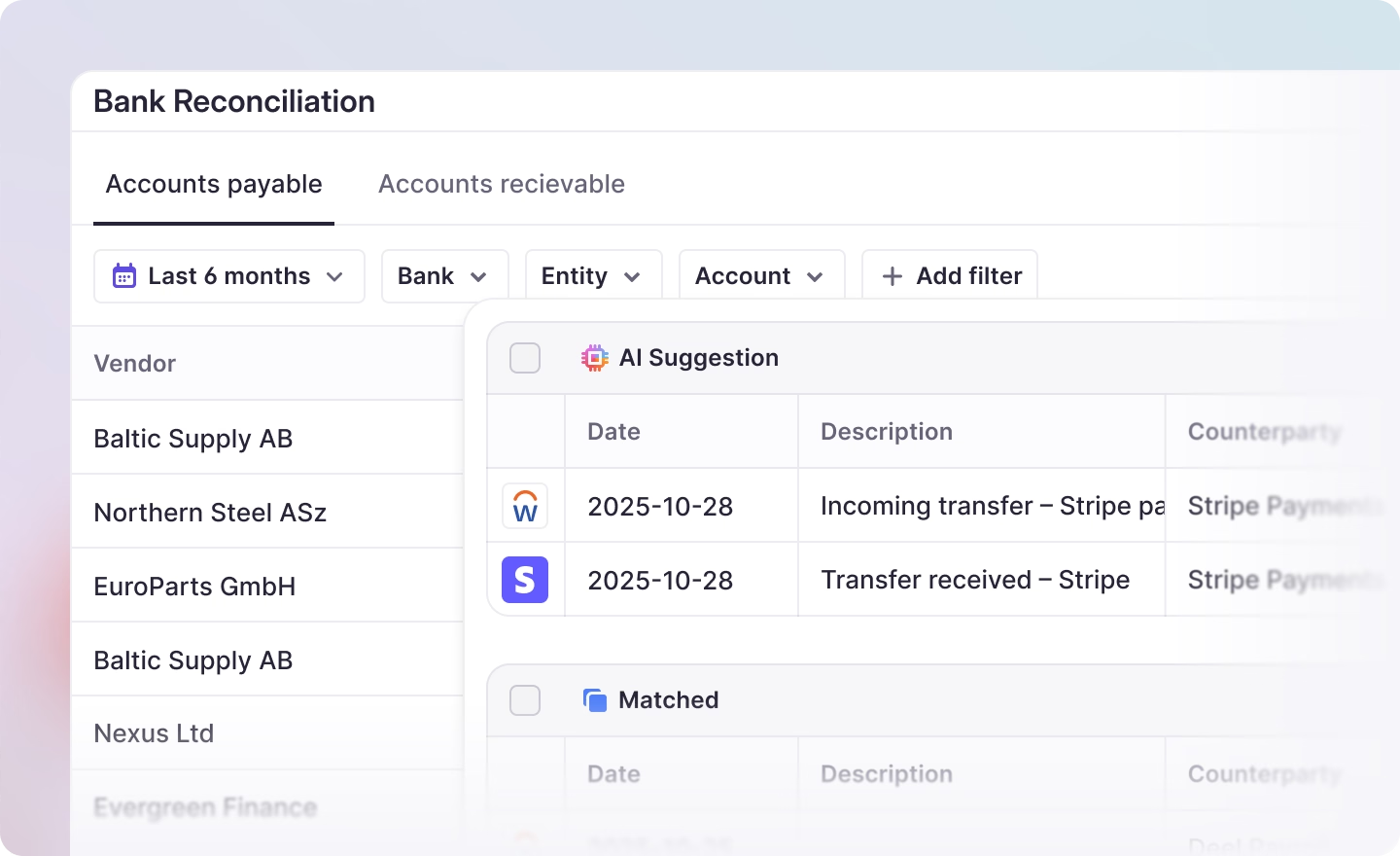
Reconciliation combines rules with a model trained on your own transaction history. The engine catches matches that rigid rules miss, like partial settlements, payer-name mismatches, or amounts quietly trimmed by a bank fee, and syncs results back to Workday. Unmatched items generate journal entries automatically, and the reconciliation agent proposes new rules when patterns become clear.
Forecasting works off real data. Atlar pulls from payables and receivables inside Workday and builds forecasts from actual commitments, so when leadership asks about liquidity, the answer comes from what the system can see rather than what someone modeled in a spreadsheet last Thursday.
The broader treasury layer
Connectivity is the entry point but not the whole product. Once data is flowing through Atlar, treasury teams can access consolidated cash positioning across every account and entity, plus investment reporting in the same place as banking activity. On top of that sits Atlar Intelligence, an AI layer that handles recurring analytical work in the background, with AI agents taking on daily cash summaries, payment status briefings, and the exception flags that would otherwise fill up an analyst's morning.
Workday remains the financial system of record, while Atlar runs alongside it as the treasury layer and handles the connection out to banks.
Worth considering
Workday was built around the idea that finance and HR belong on the same modern platform, which is still a real advantage. Bank connectivity wasn't the centerpiece of that design, though, and the workarounds compound as you add banking partners or move into new markets.
A connectivity and treasury layer doesn't compete with what Workday does well; it picks up the part most finance teams are still doing by hand.
Atlar holds a 5-star rating on G2, the highest of any TMS on the platform. Teams at GetYourGuide, Mangopay, Liberis, and Tide use Atlar alongside their ERPs to run cash, payments, and forecasting across global banking structures.
Book a demo to see how Atlar connects Workday to your banks.
_NEF-EDIT.avif)