The Missing Layer Between SAP S/4HANA and Your Banks
SAP S/4HANA is one of the most capable ERPs on the market. Finance teams that run on it have invested heavily in getting accounting, reporting, and procurement right. But between the ERP and the bank, most of the work is still manual.
Treasury teams know the routine: downloading statements in MT940 from one bank and CAMT.053 from the next, reformatting files before import, uploading payment instructions one portal at a time. As companies add banking partners and expand into new markets, the gap widens. And the people responsible for liquidity, forecasting, and cash management end up spending their days on file logistics.
What direct bank connectivity unlocks in SAP
Reconciliation that scales with you
Manual reconciliation is fine at low volumes. But as transaction counts grow and banking partners multiply, matching bank records against ERP entries becomes one of the largest time sinks in the monthly close. Statements arrive in different formats, reference fields don't align, and what should be a matching exercise turns into an investigation.
With statements flowing in automatically and AI matching running continuously, the bottleneck moves from data handling to exception management, the part that actually needs a human.
GetYourGuide, which connects 12 global banks and payment providers through Atlar, eliminated over 10 hours of manual work per month that the treasury team previously spent on reconciliation and cash data consolidation.
Payments that flow end-to-end
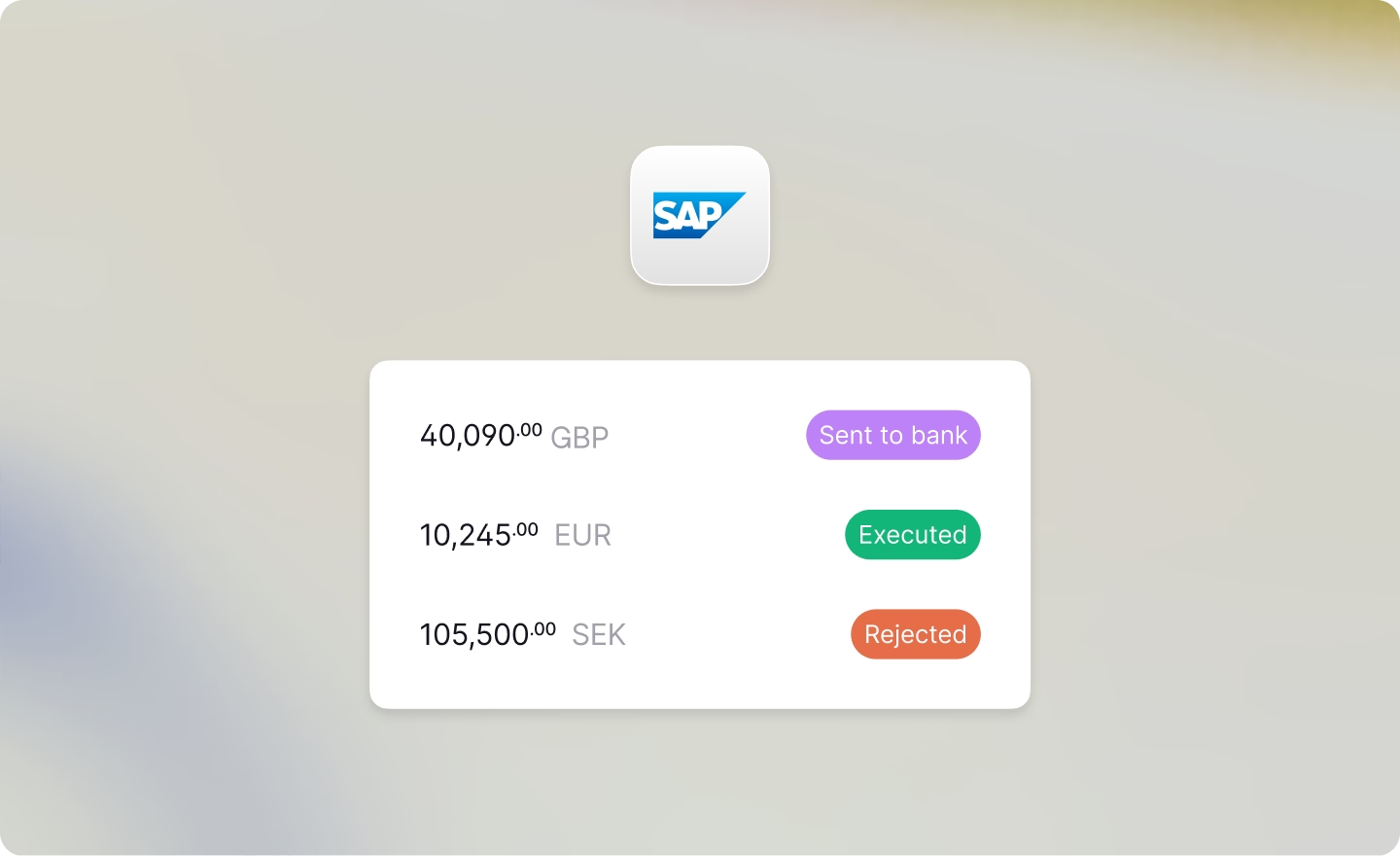
In a disconnected setup, payment files are generated in SAP, exported, and uploaded to each banking portal individually, with statuses tracked separately and approvals living in yet another system. A connected setup replaces all of that with a single workflow: payments move from SAP to the bank, confirmations feed back, and every step is logged.
Liberis, which operates across Europe and North America, reclaimed 1,600 hours per year after automating payment workflows through Atlar, replacing the manual cycle of file exports, portal uploads, and confirmation tracking.
Balances you can act on
When every bank and entity feeds into a single real-time view, the cash position becomes something your team can actually use rather than something they spend their morning building. Funding and investment decisions shift from yesterday's data to what's in the accounts right now.
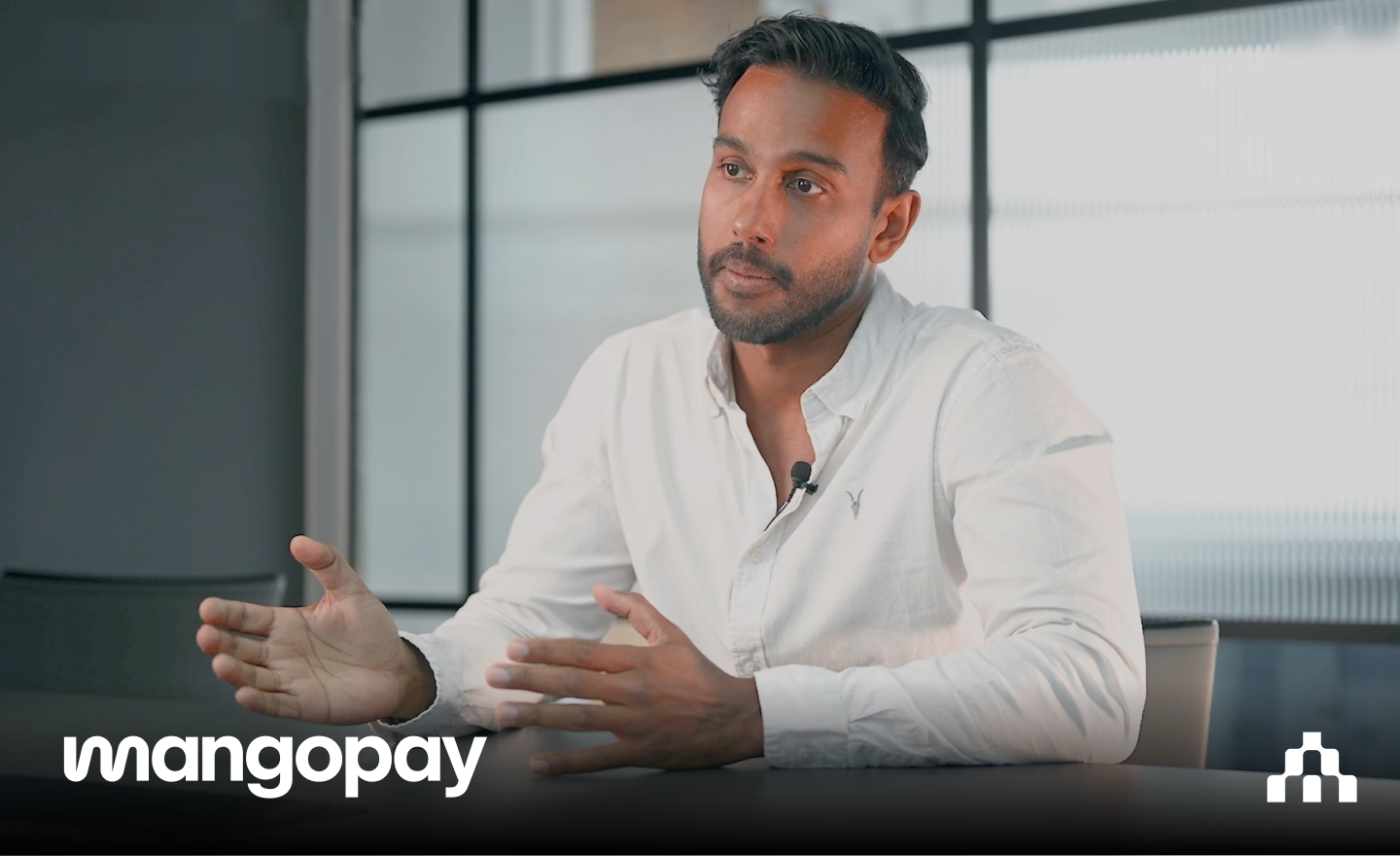
Mangopay runs treasury across roughly 700 bank accounts in multiple countries, all connected to SAP S/4HANA through Atlar. With that visibility in place, the finance team freed €20 million in idle cash and achieved a 6.1x ROI.
How the Atlar SAP integration works
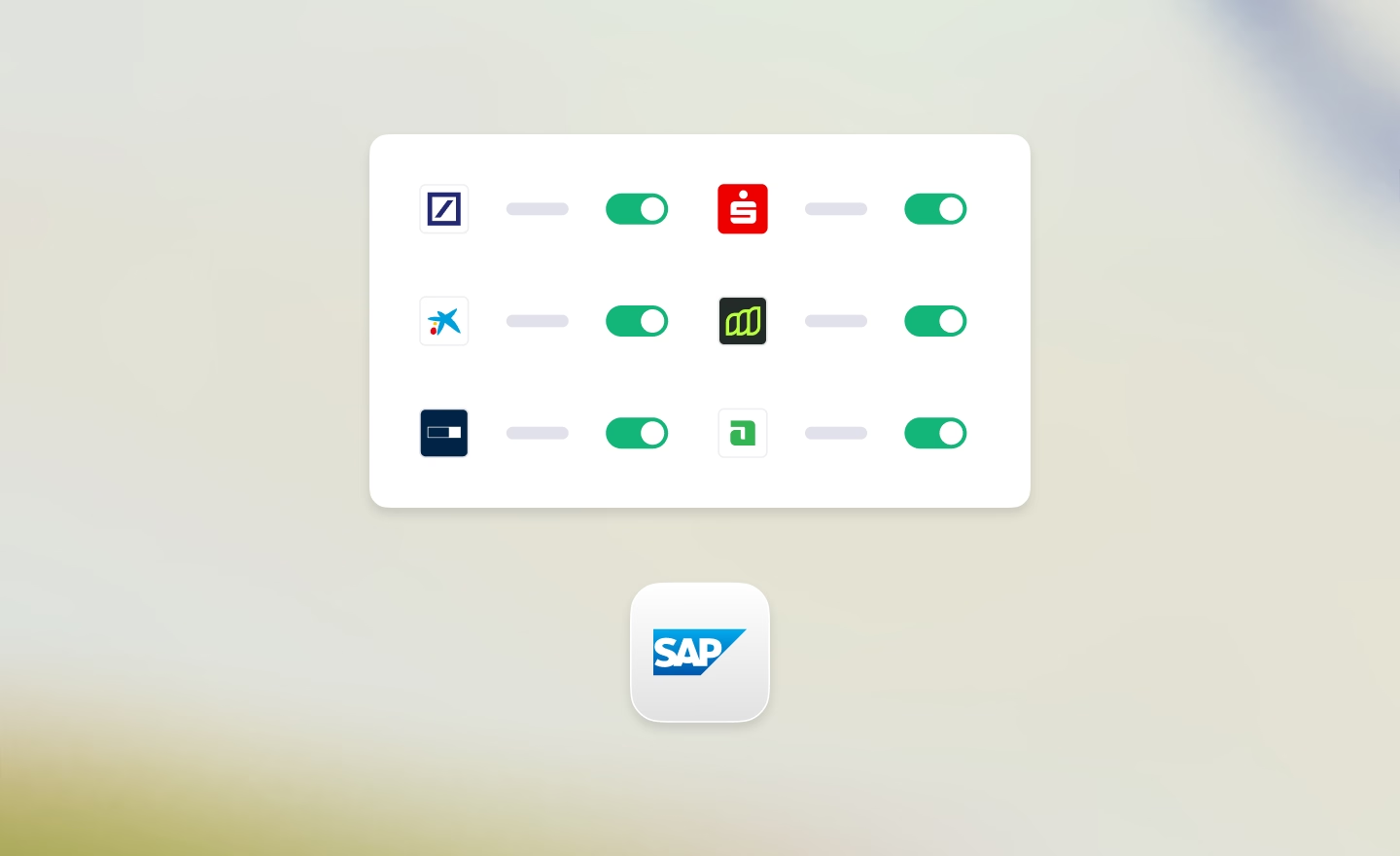
Atlar connects your banks to SAP S/4HANA through a no-code integration that supports both Cloud Public Edition and on-premise environments, so treasury connectivity doesn't have to wait for a cloud migration to finish. Unlike most SAP integration work, there's no middleware to maintain, no consulting partner required, and no IT project to scope. Treasury teams managing hundreds of bank accounts across SAP S/4HANA already rely on this integration in production.
When approvals, confirmations, and bank records are centralized rather than scattered across systems, audit trails and delegation of authority compliance become a matter of pulling up data, not reconstructing it.
Statement syncing
Bank statements arrive in SAP normalized and ready to process, regardless of what format the bank sends. Atlar manages every connection, whether API, SFTP, or EBICS, with prebuilt integrations spanning more than 100 countries.
Payment execution
Payment instructions flow from SAP to your banks without file exports, portal uploads, or manual status tracking. Confirmations feed back in real time, and every step is logged across entities, currencies, and banking partners.
Intelligent reconciliation
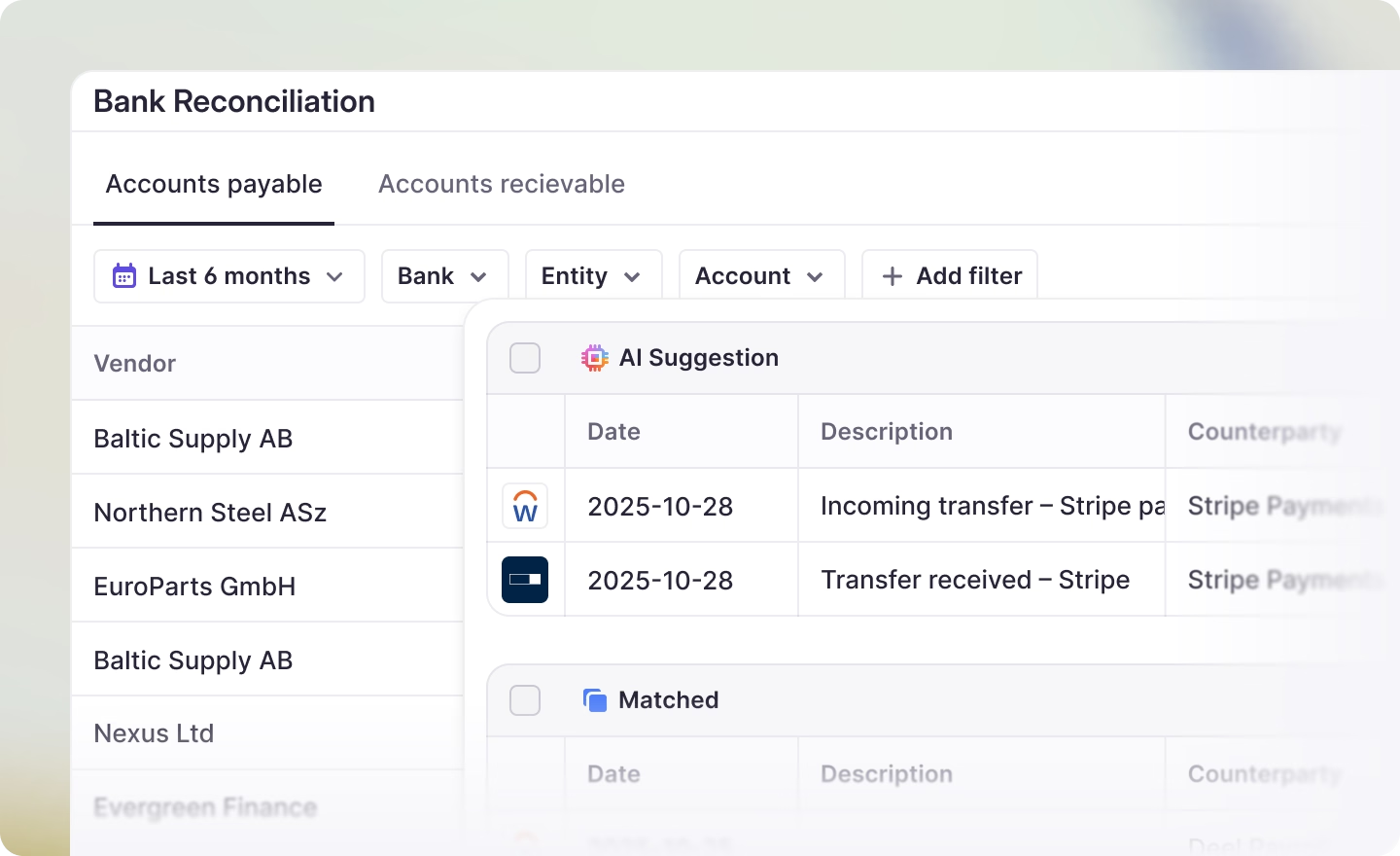
Atlar matches bank records to ERP entries using a combination of rules and AI that adapts to your transaction patterns. It catches what static rules miss: partial payments, payer name variations, bank fee discrepancies. Matches sync back to SAP bidirectionally, and unmatched records can generate journal entries automatically. The reconciliation agent goes further, proposing new matching rules based on what it observes.
Forecasting from live data
Cash forecasts in Atlar draw on actual payables and receivables from SAP, not spreadsheet projections. When a board member asks "can we fund this?", the answer comes from live data.
The full treasury platform
Atlar isn't a connector. Once your bank data flows through the platform, treasury teams also get live cash positioning, consolidated investment reporting, and Atlar Intelligence, which surfaces insights from your financial data in natural language. AI agents run daily cash positioning reports, payment briefings, and reconciliation workflows autonomously.
SAP handles accounting and reporting. Atlar handles the banks, the payments, and the intelligence layer that ties them together.
See it at scale
SAP S/4HANA wasn't built to be a bank connectivity layer, and it doesn't need to be. But for companies operating at scale, the gap between ledger and bank is where the most time gets lost.
Treasury teams at GetYourGuide, Mangopay, Liberis, and Tide run Atlar alongside SAP S/4HANA to manage cash, payments, and forecasting across their global banking structures. On G2, Atlar holds a 5-star rating, the highest of any treasury management system on the platform.
Book a demo to see how Atlar works with SAP S/4HANA.
_NEF-EDIT.avif)