Key takeaways
- AI categorization, now available to all Atlar customers, builds a full set of cash flow categorization rules from six to ten labeled examples per category.
- Categories explain why cash moved, and they underpin operating burn, runway, category-level forecasts, and variance analysis.
- The rule generator reads each transaction's counterparty, description, and payment type, taken directly from the bank with no aggregator in between.
- The AI writes rules rather than categorizing each transaction itself, so results stay consistent, auditable, and editable by the team.
- Atlar's AI agent can also create and edit rules in plain language, including rules for tax payments across every country a group operates in.
Before a finance team can see where its cash went last month, every bank transaction needs a category, such as payroll, software, tax, or customer receipts. Writing the rules that assign those categories can take weeks.
AI categorization, now available to all Atlar customers, writes those rules for you. Label a few example transactions for each category, and Atlar's rule generator proposes a full set of rules to review before anything goes live.
Why categorization comes first
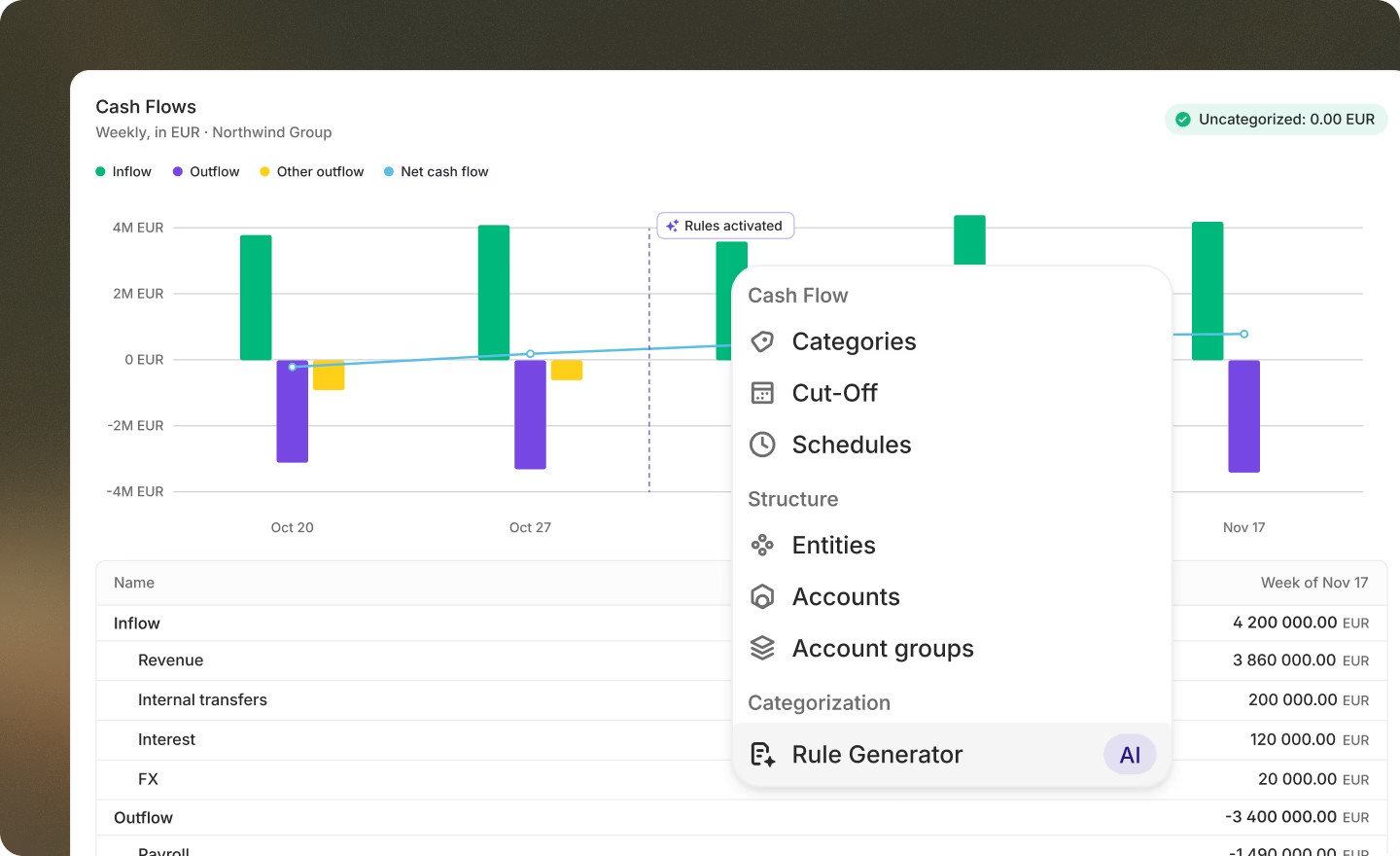
A bank balance shows how much cash a company has, but not why it moved. A month where cash fell sharply could reflect a bigger payroll run, a large tax payment, a loan repayment, or customers paying late, and each calls for a different response. Categories turn a list of bank transactions into that explanation, sorted into the lines a finance team reports on.
Operating burn and runway depend on separating a fundraise or loan drawdown from the cash the business earns and spends. Forecasts are built category by category, since payroll follows a fixed monthly cycle while customer receipts rise and fall with the seasons. And when actuals miss the forecast, categories show which line caused it.
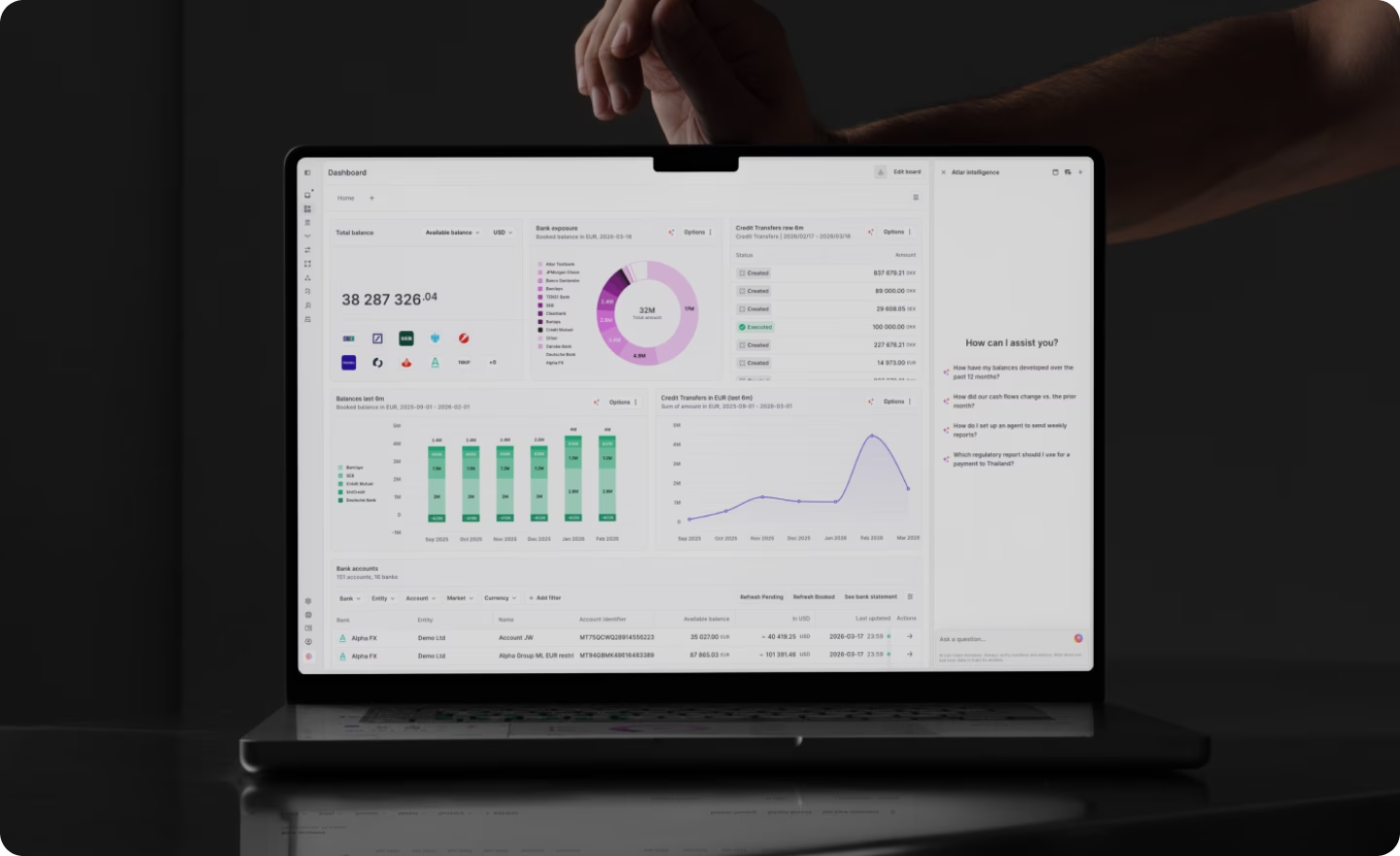
AI depends on the same structure. With categories in place, you can ask Atlar's AI agent, or Claude through Atlar's connector, how much each entity spent on software last quarter without building a report first.
Why the rules take so long to write
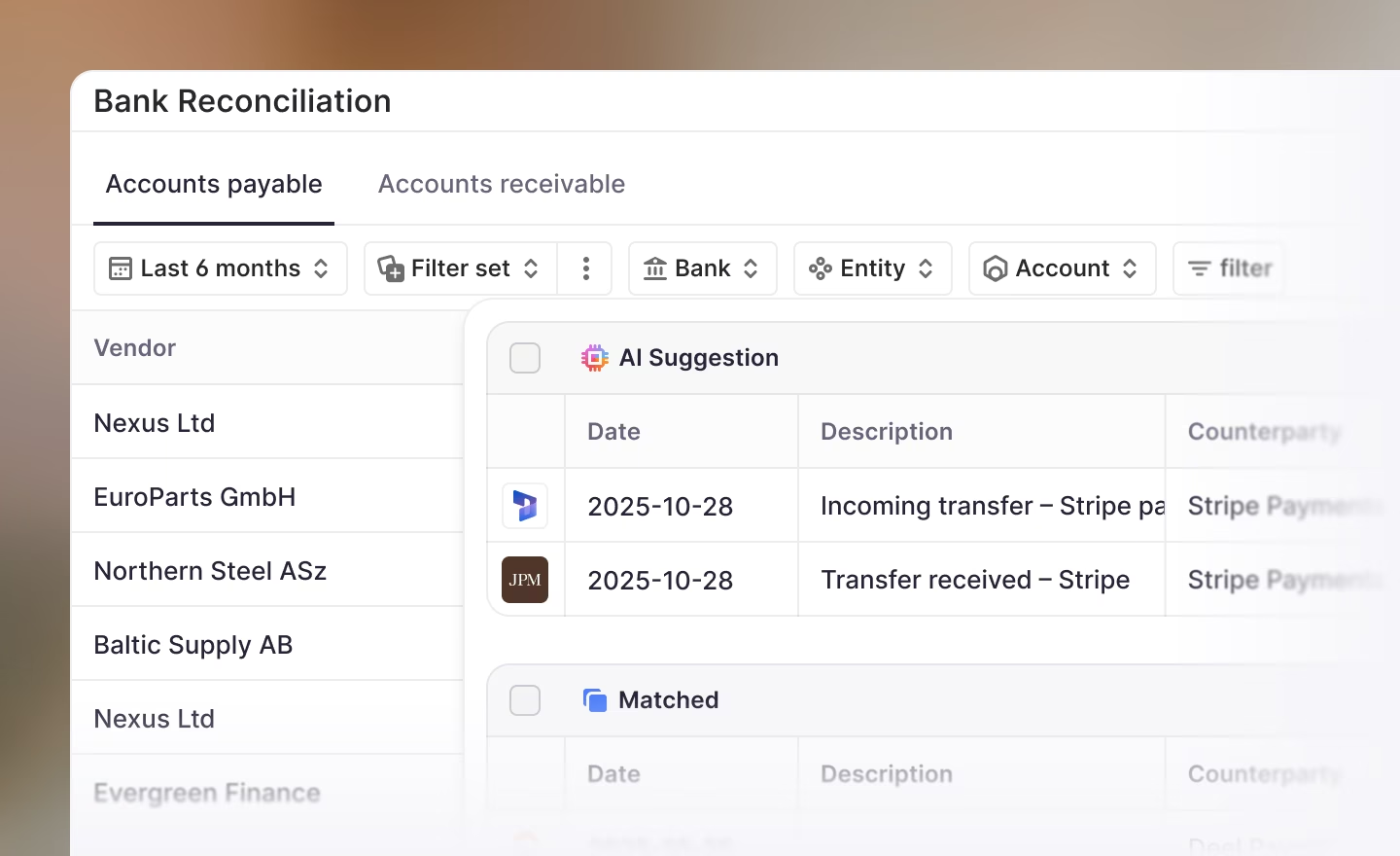
The same supplier can appear under different names depending on the bank, country, or payment rail, and descriptions are often cut short or filled with reference numbers. Each new market, entity, or bank account adds patterns that existing rules don't cover.
Rules handle this reliably once someone has worked them out, which means going through months of transactions, spotting patterns, writing a rule for each, and checking what it catches. Larger groups can need dozens of categories across several banks, and many finance teams keep a spreadsheet or script on the side for whatever the rules miss.
See AI Categorization in Action
Get a live walkthrough of AI categorization on your own transactions.
How AI categorization works
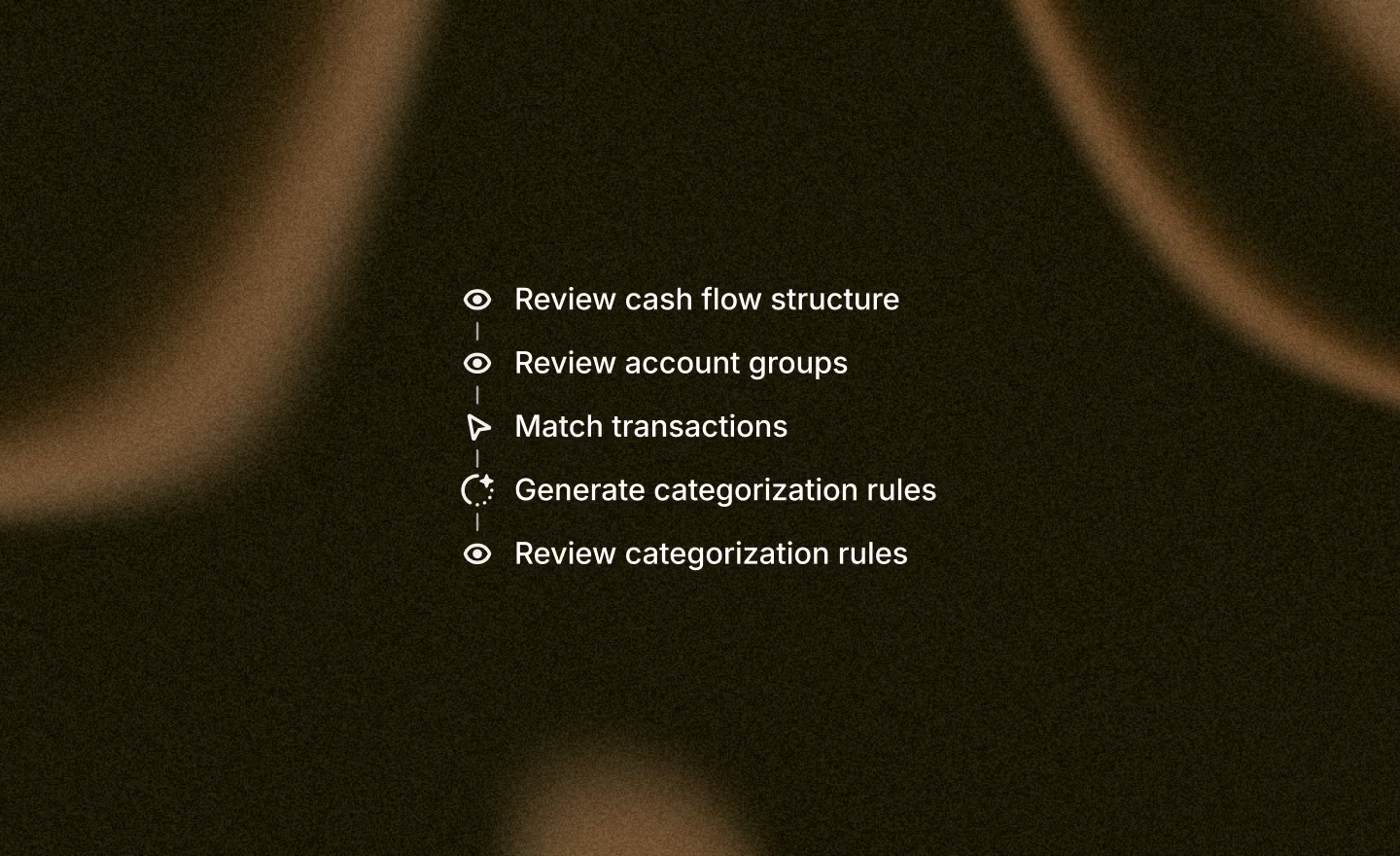
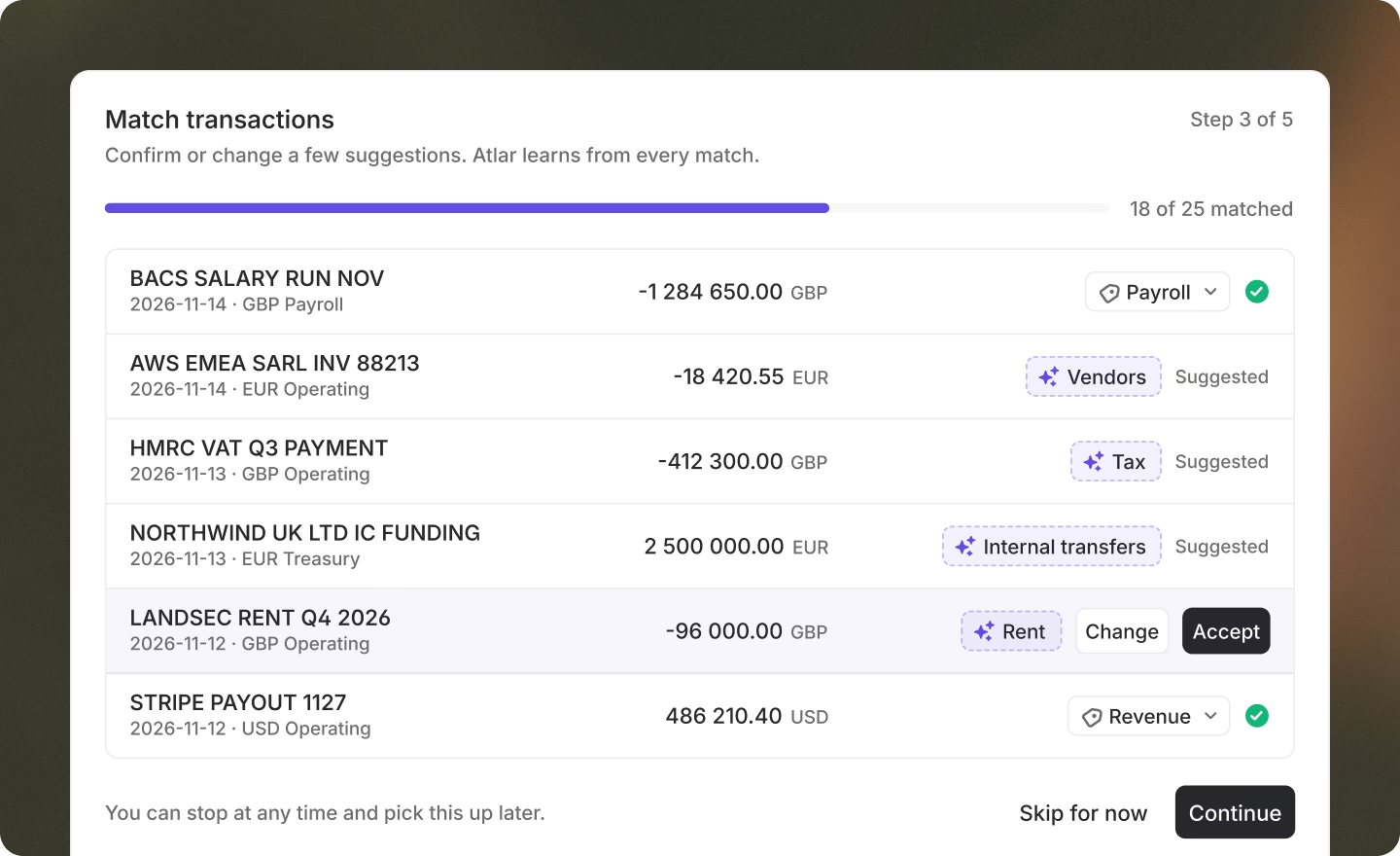
Setup starts from the existing cash flow categories, with six to ten example transactions labeled for each one. Atlar's rule generator then works out what the examples have in common, looking at each transaction's counterparty, description, and payment type, taken directly from the bank with no aggregator in between.
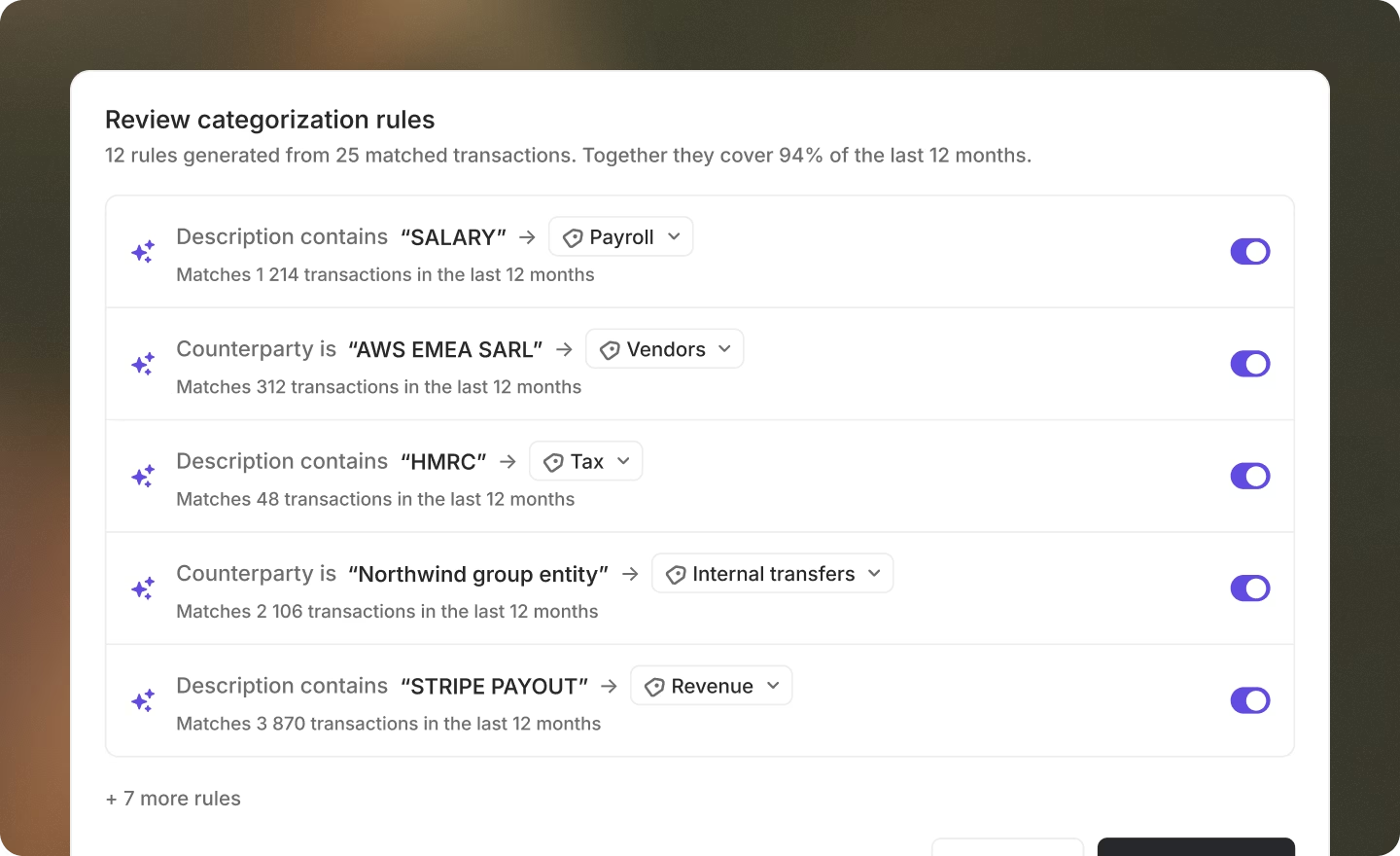
If a team labels a few payment provider settlements as B2C sales, for instance, the generator can propose a single rule that matches PayPal, Braintree, and Checkout.com by description or counterparty name.
The proposed rules can be reviewed, edited, and tested against past transactions before they're switched on. From then on, new transactions are categorized as they arrive, and past ones can be recategorized in one run.
Why the AI writes rules
The rule generator writes rules instead of categorizing each transaction itself. A model that labeled each transaction directly could put the same payment in different categories from one month to the next, which is hard to audit. A rule gives the same answer every time, and anyone on the team can read it and adjust it.
Rules can also be created and edited in plain language through Atlar's AI agent, the assistant built into the platform. Asked to categorize tax payments across every country the group operates in, it drafts the rules using what it knows about each country's tax authorities, not only the transactions in Atlar. It can also turn a list of vendors into rules or widen one that missed a few payments.
Getting AI categorization live
Teams setting up categorization can start today from the Rule Generator in settings, and the categorization guide covers the details. Support for teams with existing rules is coming soon.
If you're new to Atlar, request a demo or get in touch to see AI categorization on your own transactions.