Key takeaways
- The article argues that most AI in finance fails because it lacks reliable context and an execution layer, not because the models are weak; model capability is no longer the bottleneck.
- Finance work below the waterline — data in multiple ERPs, bank portals that do not communicate, and spreadsheets holding everything together — is fragmented by design, and incomplete inputs make deterministic finance output useless.
- Atlar was founded in 2022 and built connectivity first: direct integrations with banks in over 100 countries, API connections to tools such as Stripe and Revolut, and native apps for all major ERPs, supporting over €450 billion in annualized transaction volume.
- Atlar Intelligence added AI-powered analysis and reporting, and an AI-first bank reconciliation product in beta matches bank transactions to AP and AR records automatically, surfacing only exceptions and suggesting matching rules.
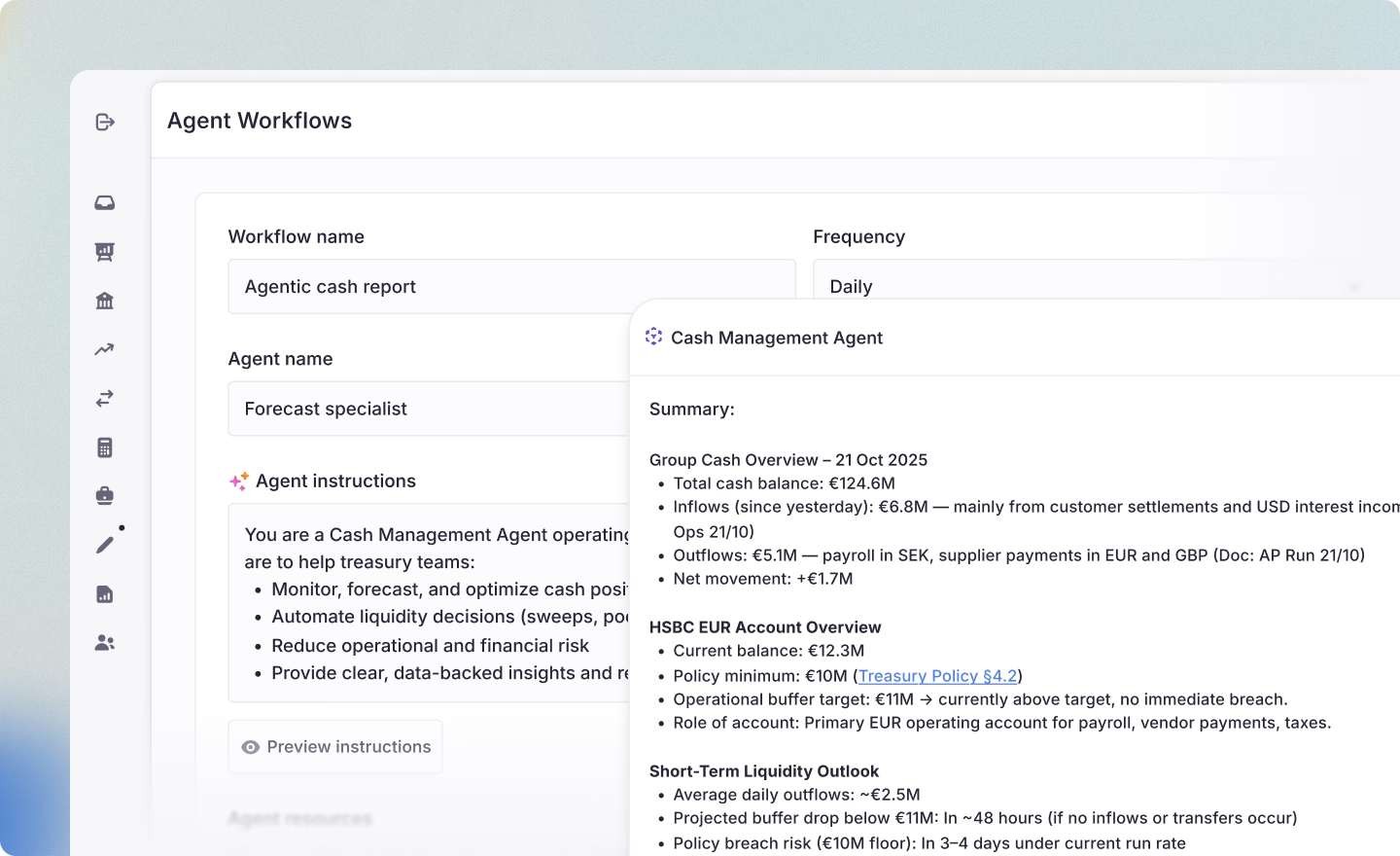
- The stated direction is agents handling routine execution such as positioning cash, generating forecasts, and managing exposures, while surfacing recommendations for humans to review and approve.
Most AI in finance fails quietly, and not because the models are bad. It fails because it lacks reliable context and the means to act. The underlying data is often incomplete, delayed, or wrong. And even with good data, agentic AI still needs an execution layer: the means to actually move money, not just reason about it. Model capability is no longer the bottleneck; data and tools are.
The iceberg
The problem is an iceberg. Above the waterline is analysis, insights, forecasting. Below the waterline is where finance teams actually spend most of their time: data sitting in multiple ERPs, bank portals that don't communicate with one another, and spreadsheets holding everything together.
This lower part of the iceberg is what AI needs to work with, and it's fragmented by design: different banks, systems, formats, and update cycles. Bringing this data together in a way that's complete, accurate, and available in real time is hard. It's also unlikely to be your main focus when evaluating new AI tools.
When AI is applied to incomplete data, the output is useless. Finance is deterministic—the numbers are either right or they're wrong. When the inputs aren't reliable, nothing built on top of them is either.
This is why AI in finance needs to start below the waterline, with connectivity and data consolidation.
Why we started with connectivity
When we founded Atlar in 2022, it was clear that AI would be central to the platform. But we also knew that useful AI in treasury required something that didn't yet exist: reliable connectivity to every system that touches cash.
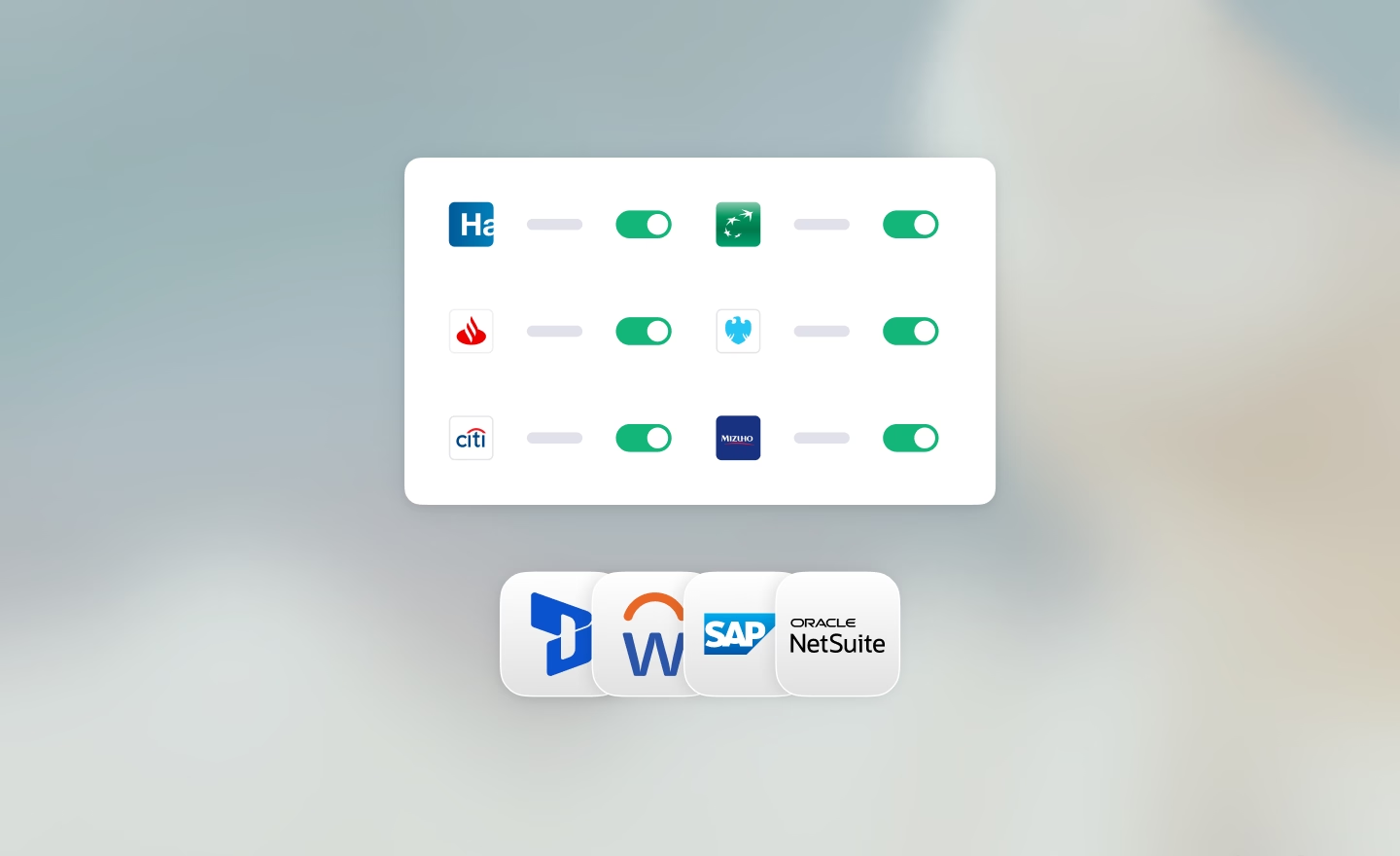
So that's what we built first. We now have direct integrations with banks in over 100 countries, API connections to modern tools like Stripe and Revolut, and native apps for all major ERPs. All of it comes together in one platform, with balances, transactions, and statements consolidated in real time.
This connectivity supports over €450 billion in annualized transaction volume for customers like Lovable, Tide, Mangopay, and Zilch.
It's also what gives AI reliable inputs: complete financial data, available in real time. In practice, this means an assistant that works like a highly capable analyst. Fast and thorough, well suited for ‘read-only’ reporting and analysis. But where AI becomes transformative is when it can act on data, not just reason about it.
Where this is all heading
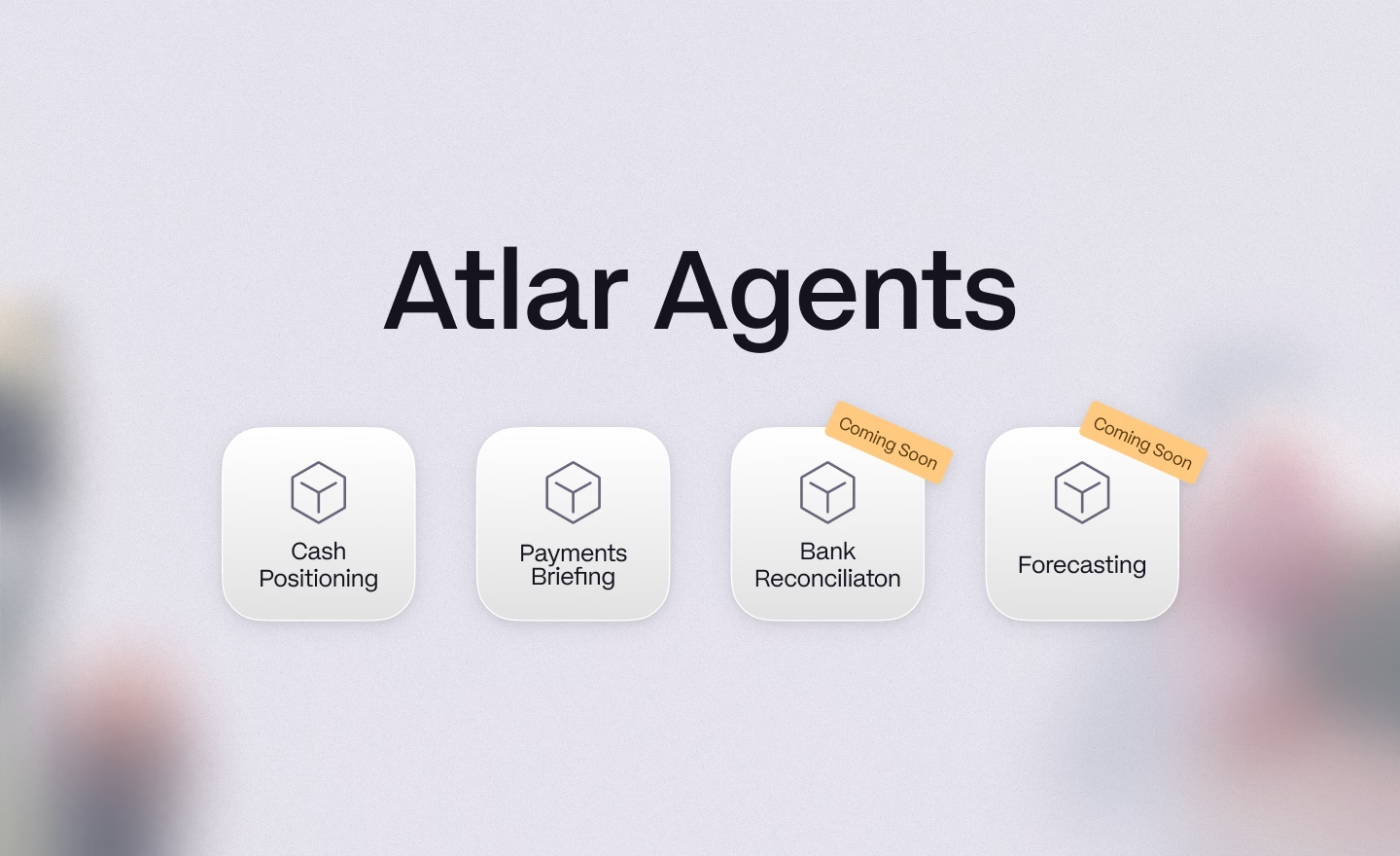
For AI to act, it needs context (data) and tools it can call. In Atlar, those tools are products: cash management, payments, forecasting, reconciliation, investments. Each one gives AI the means to act: sweeping funds, executing payments, reconciling your GL.
We've been building towards this. Late last year, we launched Atlar Intelligence, adding AI-powered analysis and reporting across the platform. Our AI assistant has now been used thousands of times by finance teams looking for faster answers.
More recently, we rolled out AI-first bank reconciliation in beta. The AI matches bank transactions to AP and AR records automatically, surfacing only exceptions for human review, and suggests matching rules based on observable patterns. The repetitive work shrinks; human judgement stays central.
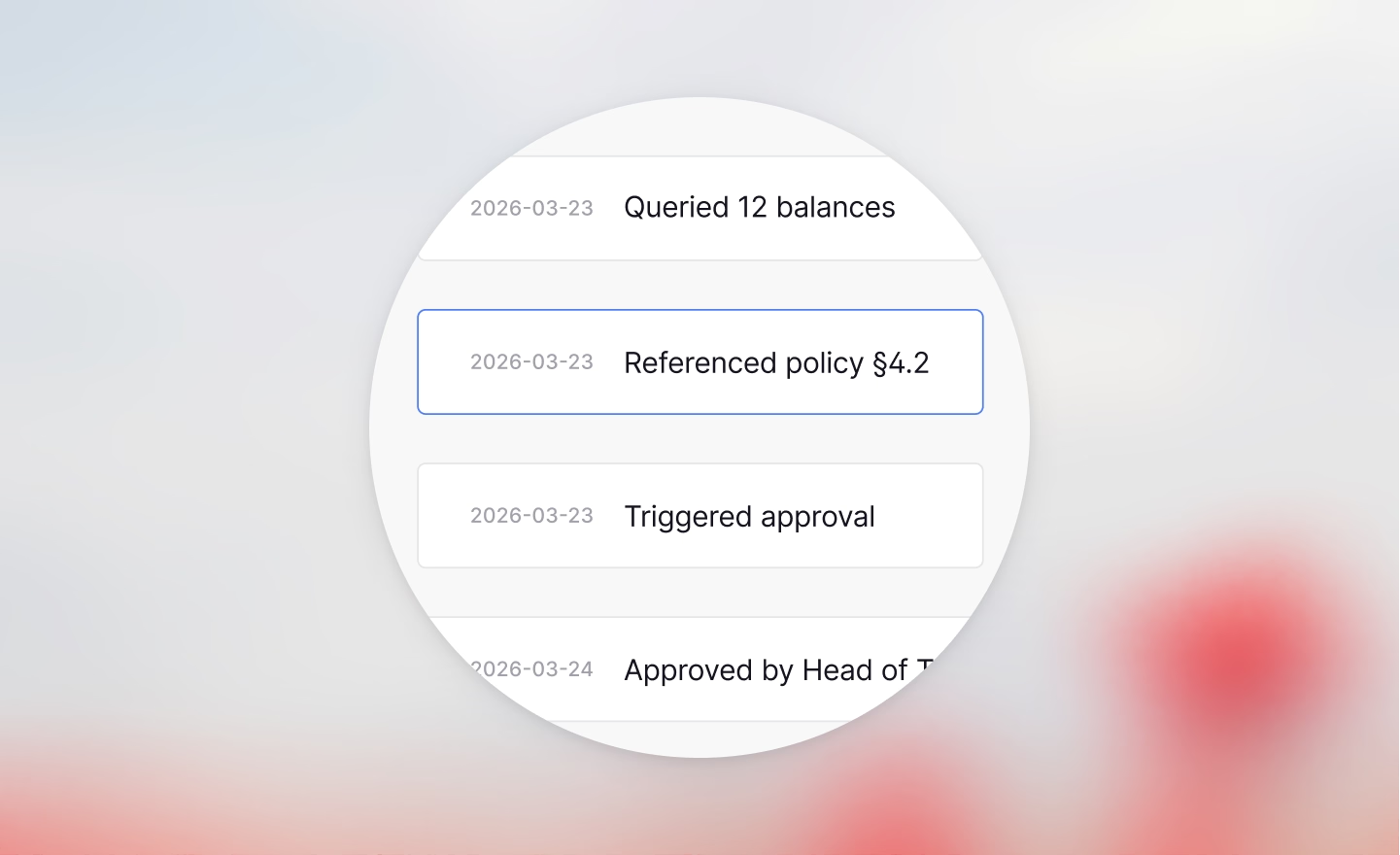
The direction of travel is clear: AI agents handling routine execution (positioning cash, generating forecasts, managing exposures) while surfacing recommendations for humans to review and approve. The leverage comes from AI doing the click-heavy tasks.
All of it built on the connectivity below the waterline.
If you're interested in seeing how our customers use Atlar's AI today, and what the future looks like, request a demo with our team.