Treasury in PE-Backed Companies: Insights from Mangopay and Zanders
For PE-backed companies, treasury often becomes urgent before it becomes strategic. The function gets attention after costly inefficiencies have already hit cash flow, not before.
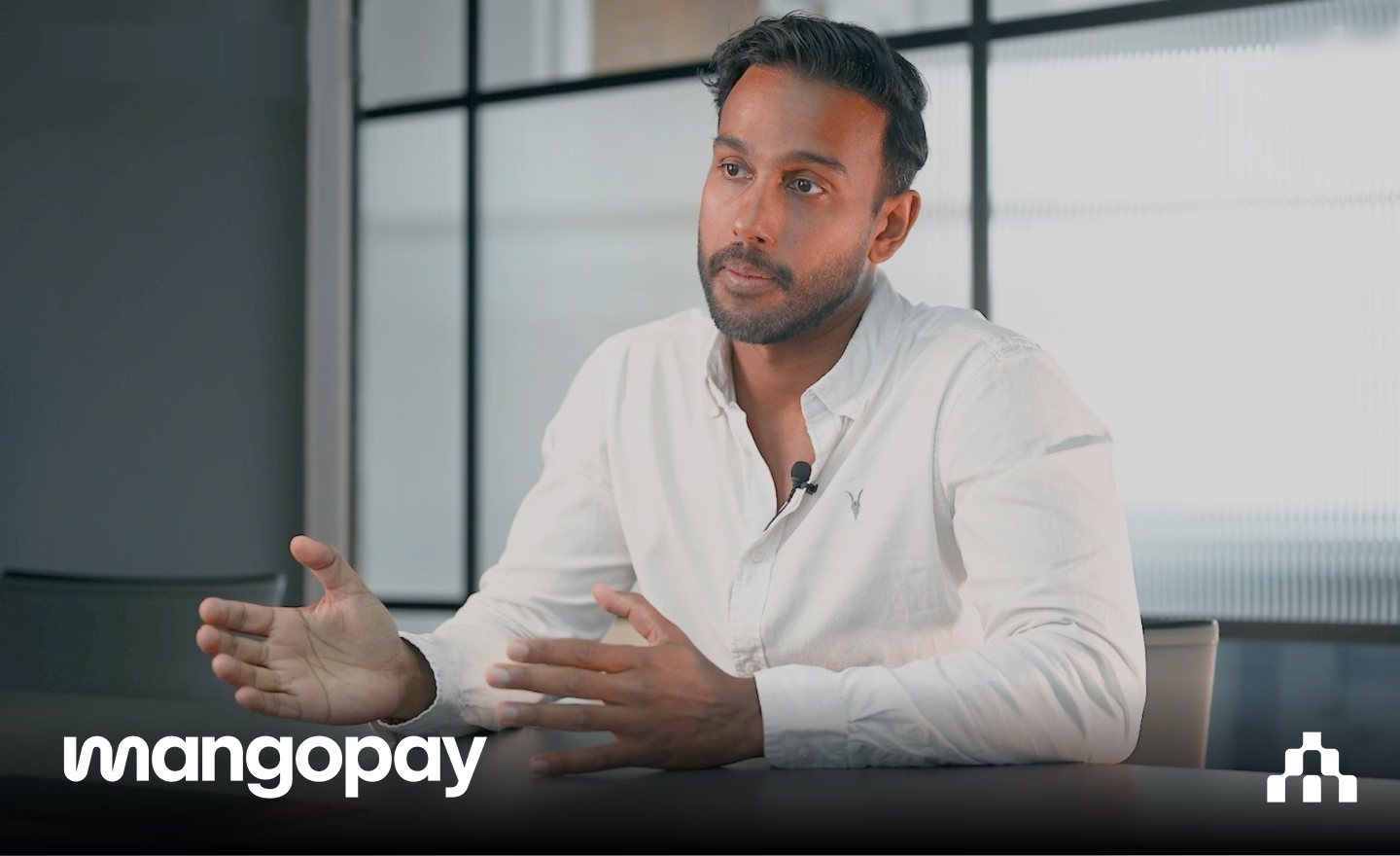
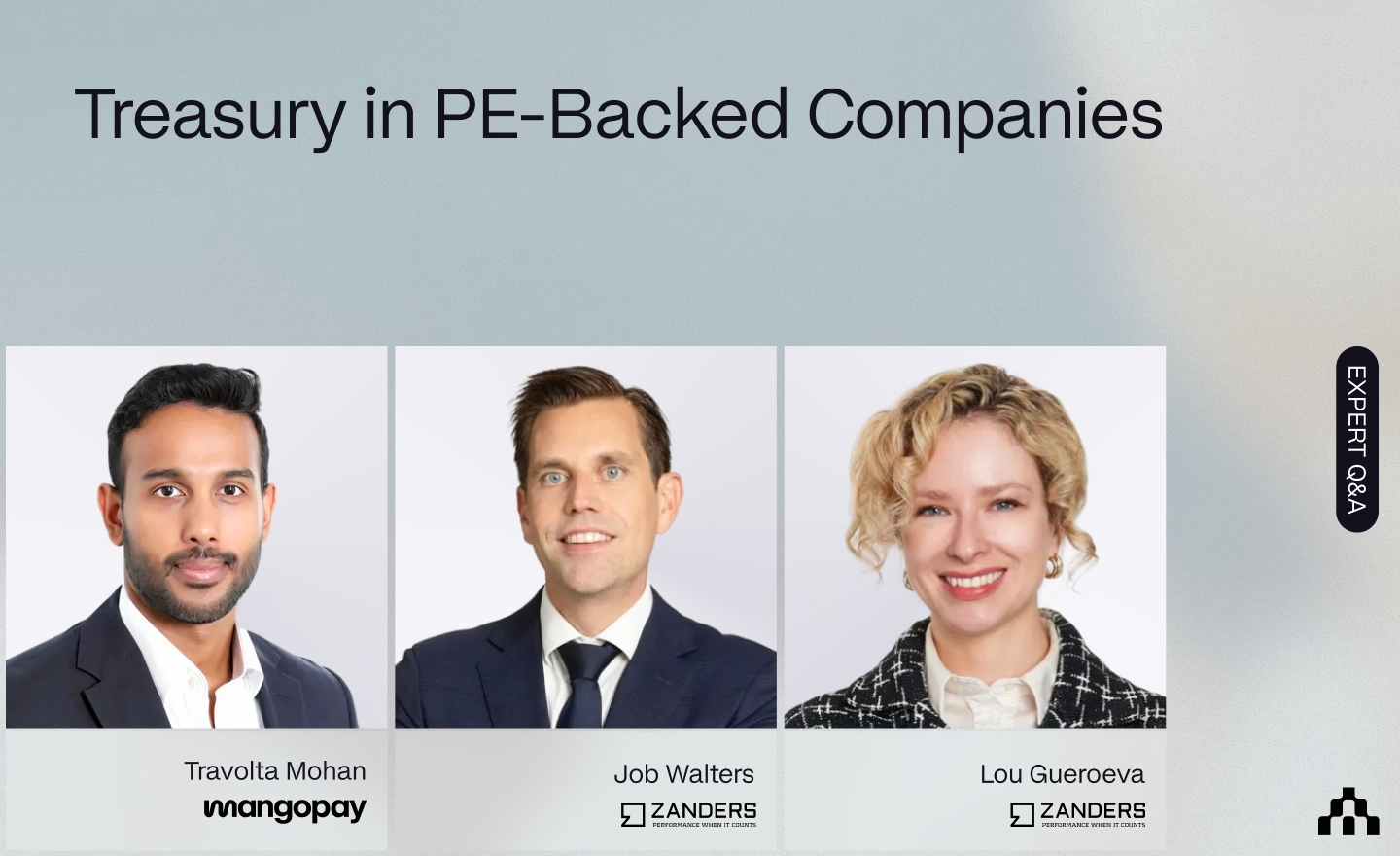
We spoke with Travolta Mohan, Group Treasurer at Mangopay (backed by Advent International), and Job Wolters and Lou Gueroeva from Zanders' Private Equity Practice, about what treasury maturity looks like in a PE context, where to start, and how to make the case for investment. This post is adapted from a recent webinar—watch the full conversation here.
The challenge: treasury gets attention too late
The primary challenge is timing. Treasury and finance often only receive attention after costly inefficiencies have already hit cash flow. As Lou describes it, sponsors often engage "when the house is already on fire," forcing reactive rather than proactive responses.
The red flags are consistent across portfolio companies:
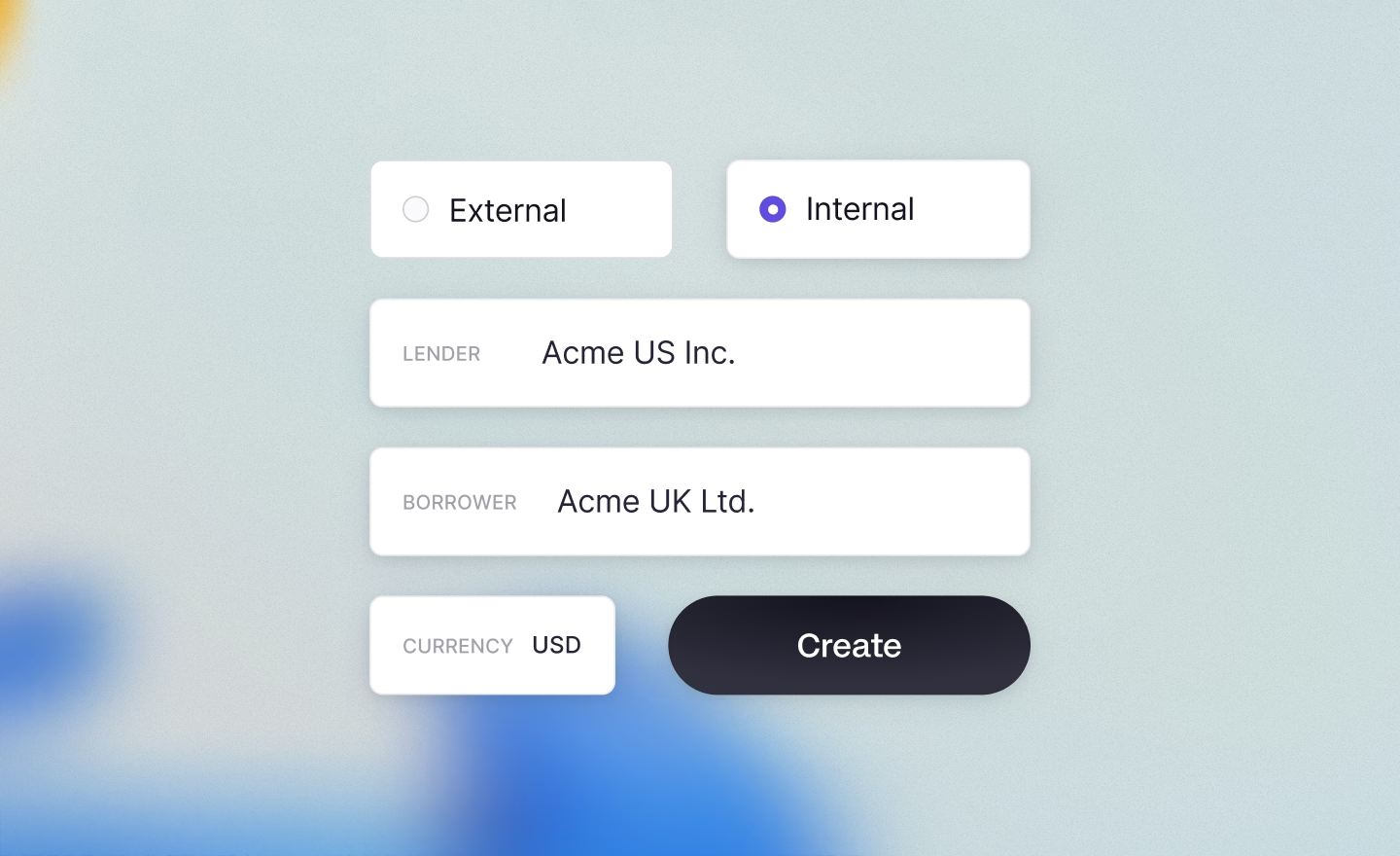
Fragmented cash management. A disjointed banking landscape, weak visibility, or poorly structured intercompany funding. Liquidity gets trapped, net debt inflates, and capital deployment slows.
Weak forecasting. Inefficient cash conversion cycles, manual workflows, and forecasts that are inconsistent or inaccurate. This prevents effective funding decisions.
Control gaps. No treasury management system, manual payments, insufficient segregation of duties. This raises the risk of fraud and errors.
Early intervention changes the trajectory. Starting from day one of the investment drives liquidity release, reduces financing needs, and creates a smoother path toward sustained cash generation.
Day one: the operator's checklist
When Travolta joined Mangopay, the treasury function faced the complexity typical of PE-backed growth companies: hundreds of bank accounts across multiple banking partners, each with its own portal and reconciliation flow.
"The first and foremost priority is understanding the operational environment," Travolta explains.
His checklist for the first weeks:
- Can I see the cash position? At Mangopay, this meant visibility across roughly 700 bank accounts spanning multiple entities and countries.
- Where are the client funds? For a regulated payments business, clarity on safeguarded funds is non-negotiable.
- How mature is the data? Is there a single golden source? Can the team access it through a front-end or directly through a data warehouse?
- How standardized are the teams? Mangopay runs five treasury teams covering coverage, cash management, reconciliation, operations, and transformation. How consistently do they build a single picture of cash?
- Who owns what? Documentation, governance, and steering committees that bring senior stakeholders together on key areas.
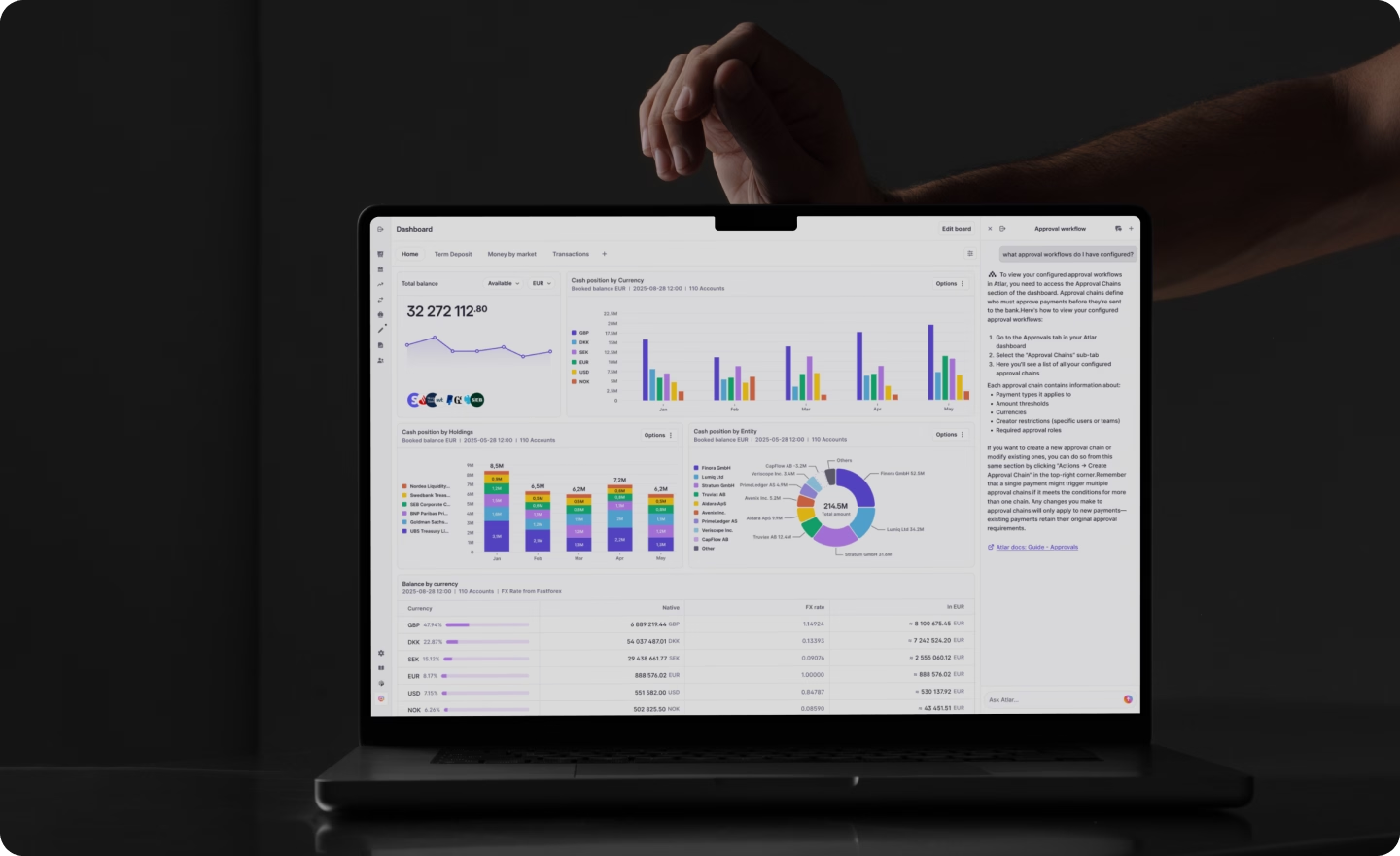
This discipline became the foundation for Mangopay's treasury transformation. Working with Atlar, they unlocked €20 million in idle cash and achieved a 6.1x ROI through improved visibility, governance, and automation. Read the full case study.
What treasury maturity actually means
The goal isn't sophistication for its own sake. It's building a treasury function that's fit for purpose: clear on strategy, roles, and how success is measured.
"More often than not, we see companies missing that opportunity to really take a step back and think: what can treasury look like in a year or maybe two years?" Job notes.
Zanders frames maturity across three dimensions.
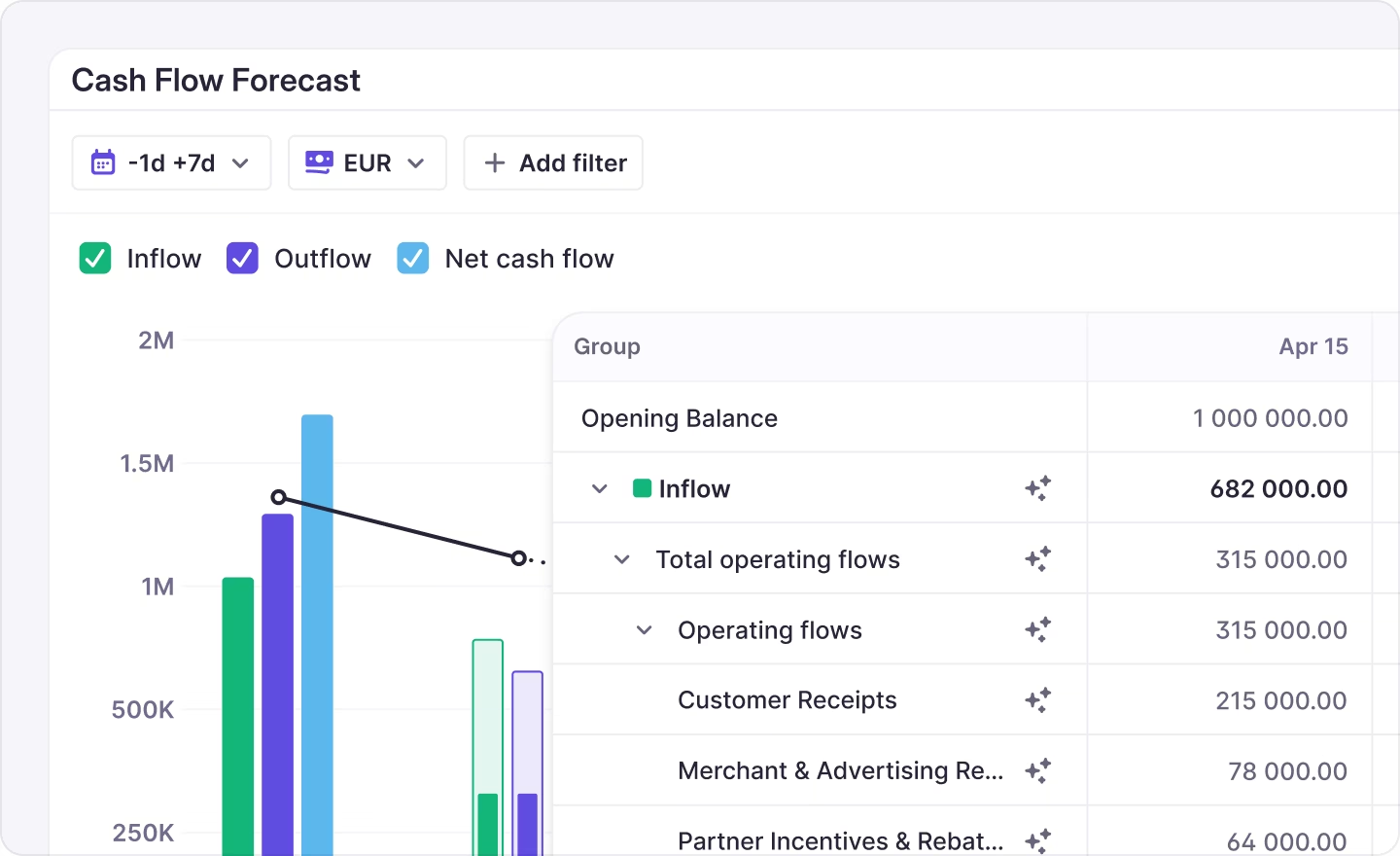
Visibility: Real-time cash insights, precise liquidity forecasting, centralized pooling. This unlocks trapped liquidity and improves forecasting accuracy.
Efficiency: Optimized bank costs, automated processes, better working capital control. The payoff: lower fees, less manual effort, improved margins.
Scalability: Treasury systems that support growth, acquisitions, and new entities without starting from scratch each time.
The quantifiable impact, based on Zanders' experience across thousands of projects: 10–20% reduction in banking fees, significant reduction in manual effort, and in some cases up to half a turn of exit multiple uplift.
The PE mindset: urgency and prioritization
What distinguishes treasury in a PE-backed environment? Travolta's answer is simple: urgency.
"The key difference is the urgency that you need to bring. There's the expectation to bring in excellence, but before that, you need discipline. In a PE environment, we're trying to do a lot, all the time. Prioritization is so important."
This means developing people who are proactive, comfortable with ambiguity, and focused on continuous delivery. "It's not just about moving money," Travolta explains. "Now we're really thinking in a group perspective as we grow. That unlocks scale in a new way for us."
Securing resources
The highest-value task is fixing visibility and forecasting. But the first step is often simpler: rationalizing the banking landscape. Implementing technology is difficult without that foundation in place.
The real challenge is often political. Treasury competes for attention with other priorities. As Job puts it: "Raise your hand and make sure it's part of the value creation plan to take a look at treasury."
Frame treasury maturity as a direct driver of value creation, and you unlock the priority and resources needed for success.
AI can accelerate parts of this, whether that's improving cash flow forecasts, making sense of unstructured data, or automating repetitive tasks. Travolta has taken a hands-on approach at Mangopay: weekly training sessions and a task force tackling specific use cases. The philosophy: "Automate tasks, but not responsibility, especially in a regulated industry."
Key takeaways
- Treasury gets attention too late in most PE-backed companies. Early intervention drives better outcomes.
- Start with visibility: you can't manage what you can't see.
- Control and governance are foundational, not optional.
- Urgency and prioritization define the PE-backed treasury mindset.
- Technology is an enabler, but rationalizing your banking landscape comes first.
Treasury maturity isn't about building a large team or complex systems. It's about clarity, control, and a function that's ready to scale with the business.
Want to see what this looks like in practice? Read the Mangopay case study.

_NEF-EDIT.avif)