Key takeaways
- Bank reconciliation still typically means exporting a statement, matching transactions line by line, investigating discrepancies, and repeating until the numbers agree—a workflow that handles hundreds of items but becomes a bottleneck at thousands.
- ERP matching often still depends on downloading statements and on exact amount-and-reference matches, which fail on partial payments, FX conversions, timing differences, and money that has passed through multiple systems.
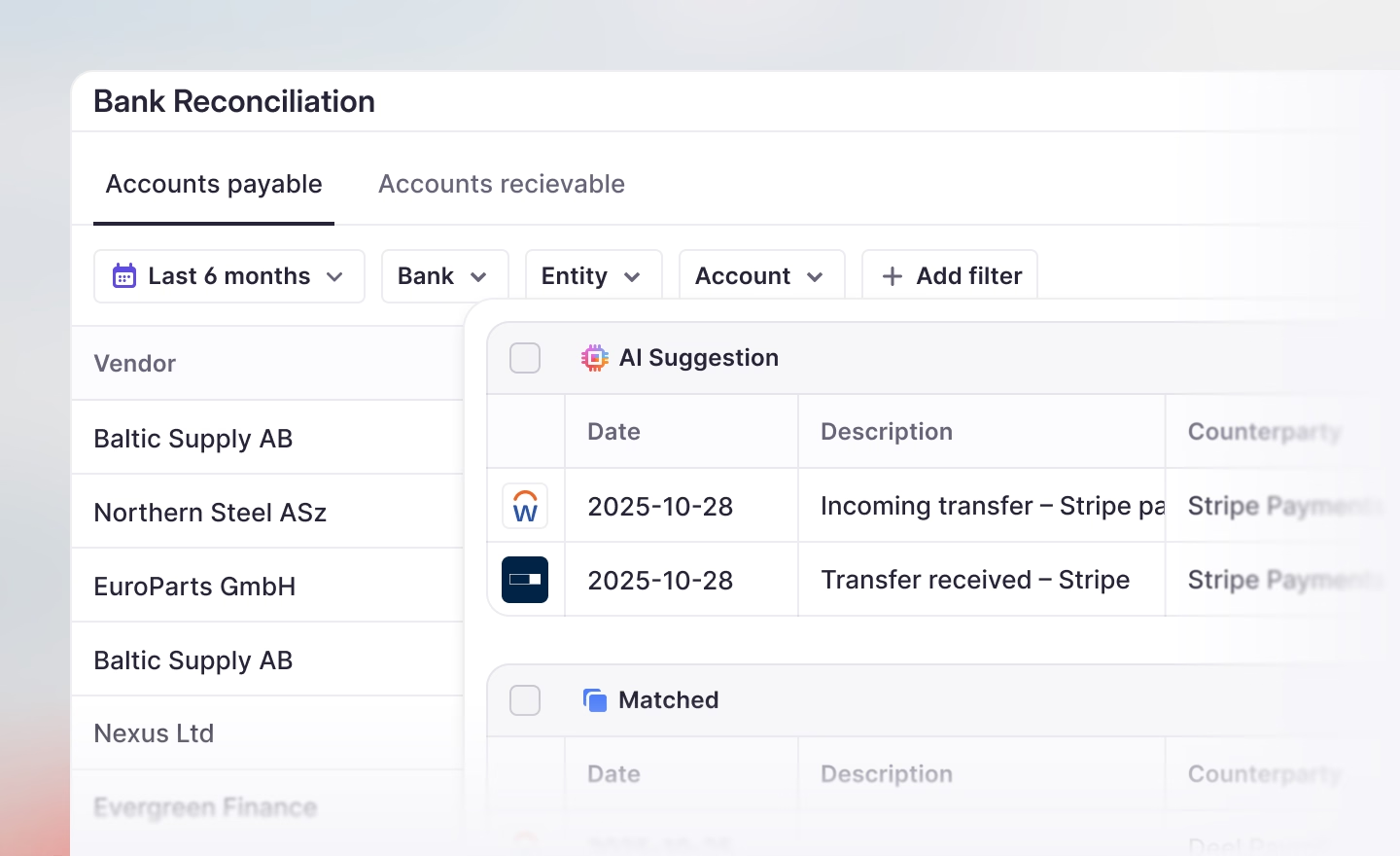
- AI-powered reconciliation estimates the most likely match from available data, so it can link fuzzy payer names, fee deductions, and one deposit to several invoices that static rules treat as exceptions.
- When users accept, modify, or dismiss suggested matches, the system can add rules that cover similar cases later, so more items clear automatically over time.
- Upvest, a German investment infrastructure provider, achieved 80% faster bank reconciliation and AP/AR booking after streamlining finance processes with Atlar, which supports both rule-based matching and AI-powered reconciliation.
Bank reconciliation is one of the most essential processes in finance—and one of the most time-consuming. The workflow hasn't changed much in decades: export the bank statement, open a spreadsheet, match transactions line by line, investigate discrepancies, adjust, and repeat until the numbers agree.
It's not glamorous work, but it's critical for accurate financial reporting, fraud prevention, and cash visibility. For most finance teams, it's also a recurring source of frustration—not because the task is difficult, but because it scales poorly. The same workflow that handles 500 transactions per month becomes a bottleneck at 5,000, and a serious problem at 50,000.
What's changing now isn't the importance of reconciliation. It's the recognition that matching transactions shouldn't require the same manual effort it did twenty years ago.
This guide explores how AI is reshaping bank reconciliation, what it means for month-end close processes, and what finance teams should look for when evaluating modern reconciliation tools. For a detailed walkthrough of reconciliation fundamentals, see our comprehensive guide to bank reconciliation.
Where spreadsheets break down
Spreadsheets persist because they're flexible, familiar, and free. For smaller companies with straightforward transactions, they work well enough. The problems emerge with scale and complexity.
Consider the scenarios that consume the most time: a payment sent in USD that settles in EUR after conversion, a customer deposit that arrives net of processor fees, a single bank transaction that needs to match against a batch of twelve invoices. Each requires interpretation. Each interrupts the rhythm of matching. At volume, these exceptions accumulate into hours of manual investigation.
Then there's the error rate. Even careful, experienced accountants make mistakes when processing hundreds of transactions manually. A transposed digit, a duplicated entry, a missed fee—each creates a discrepancy that compounds through the close process.
For growing companies, the math stops working. Transaction volumes increase, but reconciliation headcount rarely scales proportionally. The close stretches longer. Cash visibility lags. And finance teams spend their time on data wrangling rather than analysis.
Why ERP-based matching falls short
Enterprise resource planning (ERP) systems promised to solve this by centralizing transaction data. Import bank feeds directly into the general ledger, match against recorded transactions, and eliminate the spreadsheet.
In practice, the improvement has been partial. Setting up direct bank connections often requires significant engineering effort, with each bank's protocols demanding custom configuration and ongoing maintenance. Many finance teams end up manually downloading statements and uploading them anyway—automating part of the process while preserving the most tedious steps.
More fundamentally, ERP-based reconciliation relies on exact matching. If the amount and reference align precisely, the system clears the item. If they don't, it becomes an exception for manual review.
This works for straightforward transactions. It struggles with the reality of modern payments—partial payments, foreign exchange conversions, timing differences across time zones, and the variations that arise when money moves through multiple systems before reaching your bank account.
What AI changes
The difference between rule-based and AI-powered reconciliation isn't primarily about speed. It's about how matching decisions get made.
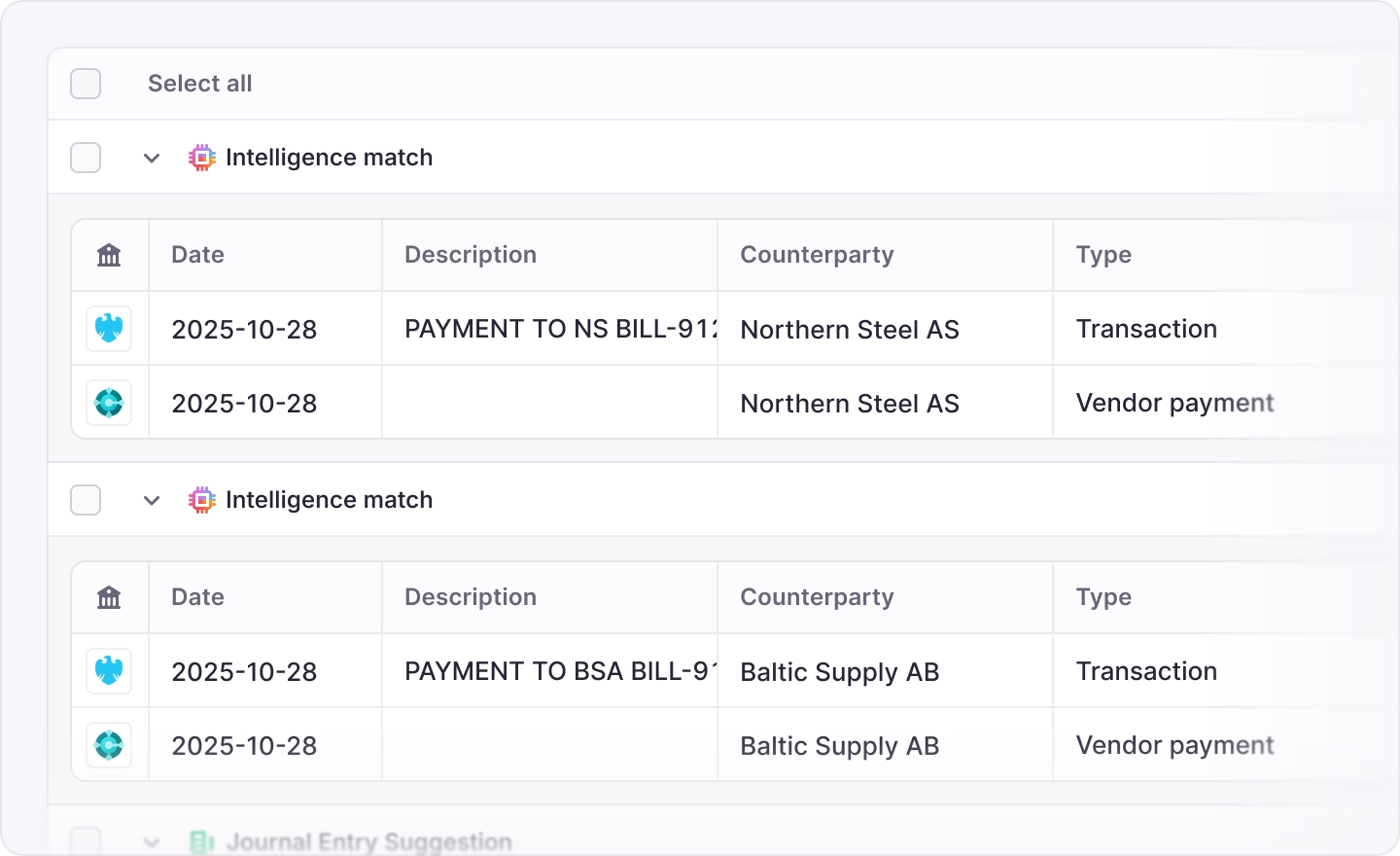
Rule-based systems ask: does this transaction match exactly? AI-powered systems ask: given everything we know, what is the most likely match?
When a €9,970 payment labeled "ACME Inc" arrives against a €10,000 invoice from Acme Corporation, a rule-based system sees a mismatch. An AI system recognizes that the €30 difference likely represents a bank fee and that the payer name, despite formatting variations, refers to the same entity.
Similarly, when a single bank deposit needs to match against multiple open receivables, or when payment references are buried in unstructured transaction descriptions, AI can identify patterns that static rules cannot capture.
AI that improves over time
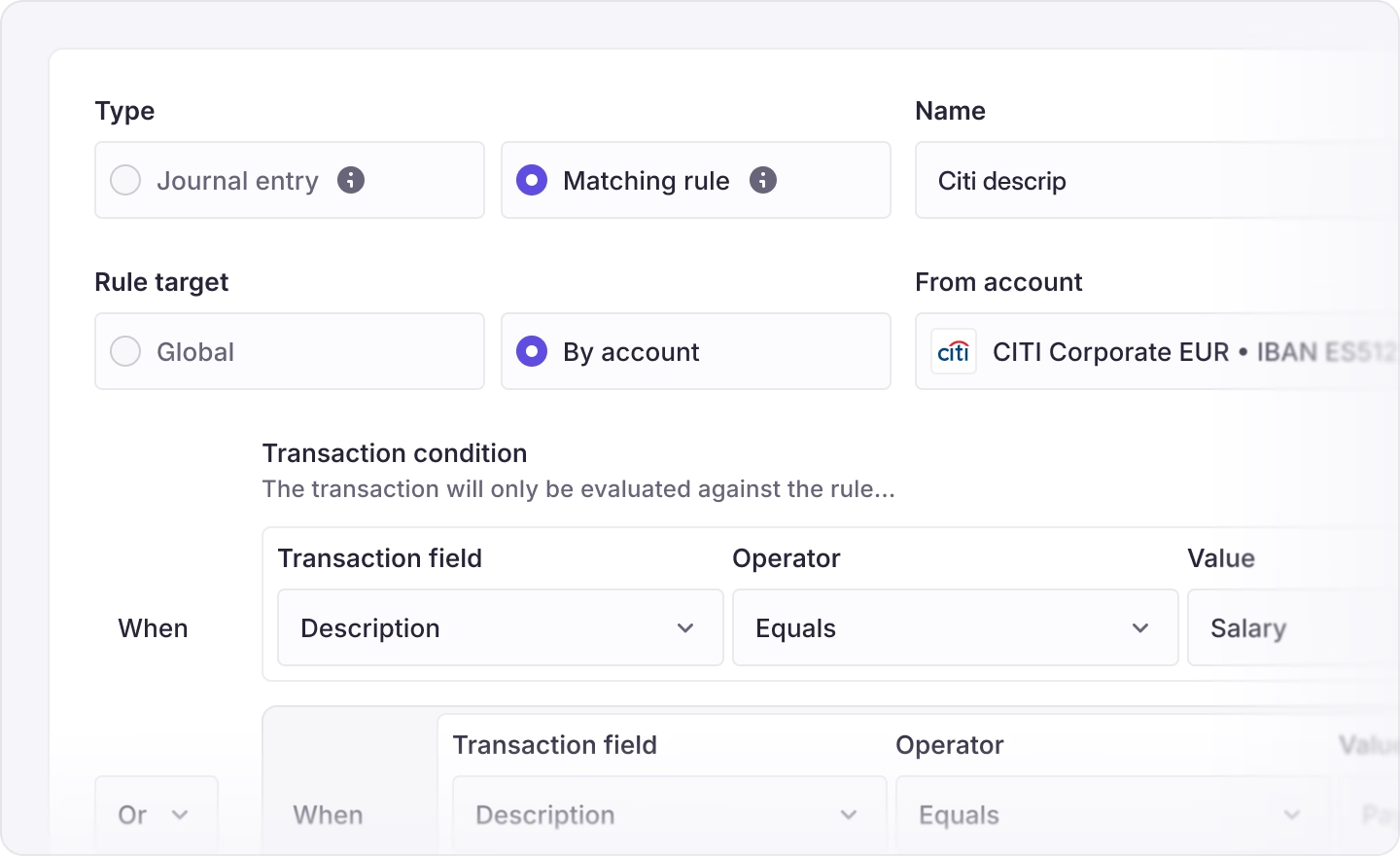
The more significant shift is that AI-powered systems get more accurate over time. When the AI identifies potential matches through fuzzy search or pattern recognition, it can suggest rules to cover similar scenarios in future. Users accept, modify, or dismiss these suggestions—and as the rule set grows, more transactions match automatically.
The system improves not because the AI itself learns, but because it continuously identifies opportunities to expand and refine your matching logic.
An example
Consider a scenario that would stall a rule-based system: a €47,832.15 deposit arrives from "ACME GROUP TREASURY" with the reference "PAYMENTS MARCH." Your AR ledger shows three open invoices for Acme Corporation—€22,500, €18,750, and €6,600—totaling €47,850. The €17.85 difference could be a bank fee, a small credit note, or an early payment discount.
A rule-based system flags this as an exception requiring manual investigation. An AI system recognizes that Acme Group Treasury is the payment entity for Acme Corporation (having seen this pattern before), identifies the three invoices as likely matches based on timing and total, and suggests the variance is consistent with Acme's standard early payment discount.
The finance team reviews the suggestion, confirms it, and the match posts. That scenario can then inform a new rule—so similar Acme payments match automatically in future.
Upvest, a German investment infrastructure provider, saw this kind of improvement after streamlining their finance processes with Atlar, achieving 80% faster bank reconciliation and AP/AR booking.
The role of human judgment
This is where AI reconciliation delivers genuine value: not by eliminating human judgment, but by doing the investigative work that previously consumed hours of analyst time.
The goal is AI handling 100% of matching, with humans reviewing rather than performing the work. Financial accuracy demands correctness, and audit requirements mean every match must be defensible. But there's a difference between reviewing a suggested match with full context and manually hunting through records to find one. Atlar's bank reconciliation is built around this distinction.
From monthly close to continuous reconciliation
Under manual or semi-automated approaches, reconciliation typically happens in a batch at month-end. The finance team gathers statements, imports data, works through exceptions, and eventually closes the books—often consuming several days.
With AI-powered reconciliation running on real-time bank data, transactions can be matched as they occur. This shift toward continuous accounting means exceptions surface immediately, while context is fresh, rather than appearing weeks later.
The monthly close shrinks from days to hours. Cash visibility improves. And finance teams can investigate exceptions when they're still easy to resolve—ideally fixing upstream issues before they recur.
The impact scales with transaction volume. Liberis, a UK-based revenue finance provider processing thousands of transactions daily, saves 1,600 hours annually on cash validation alone.
The control environment strengthens too. Every match decision is logged and traceable. Anomalies that might indicate errors or fraud surface earlier. And the consistency of automated matching eliminates the variability inherent in manual processes.
How Atlar approaches bank reconciliation
Atlar's bank reconciliation combines AI-powered matching with the connectivity and ERP integration that make continuous reconciliation practical.
Real-time bank connectivity
Atlar connects directly to banks and payment platforms, so reconciliations run on complete, current information. Transactions flow into the system as they occur—no manual downloads, no formatting, no delays.
Intelligent matching
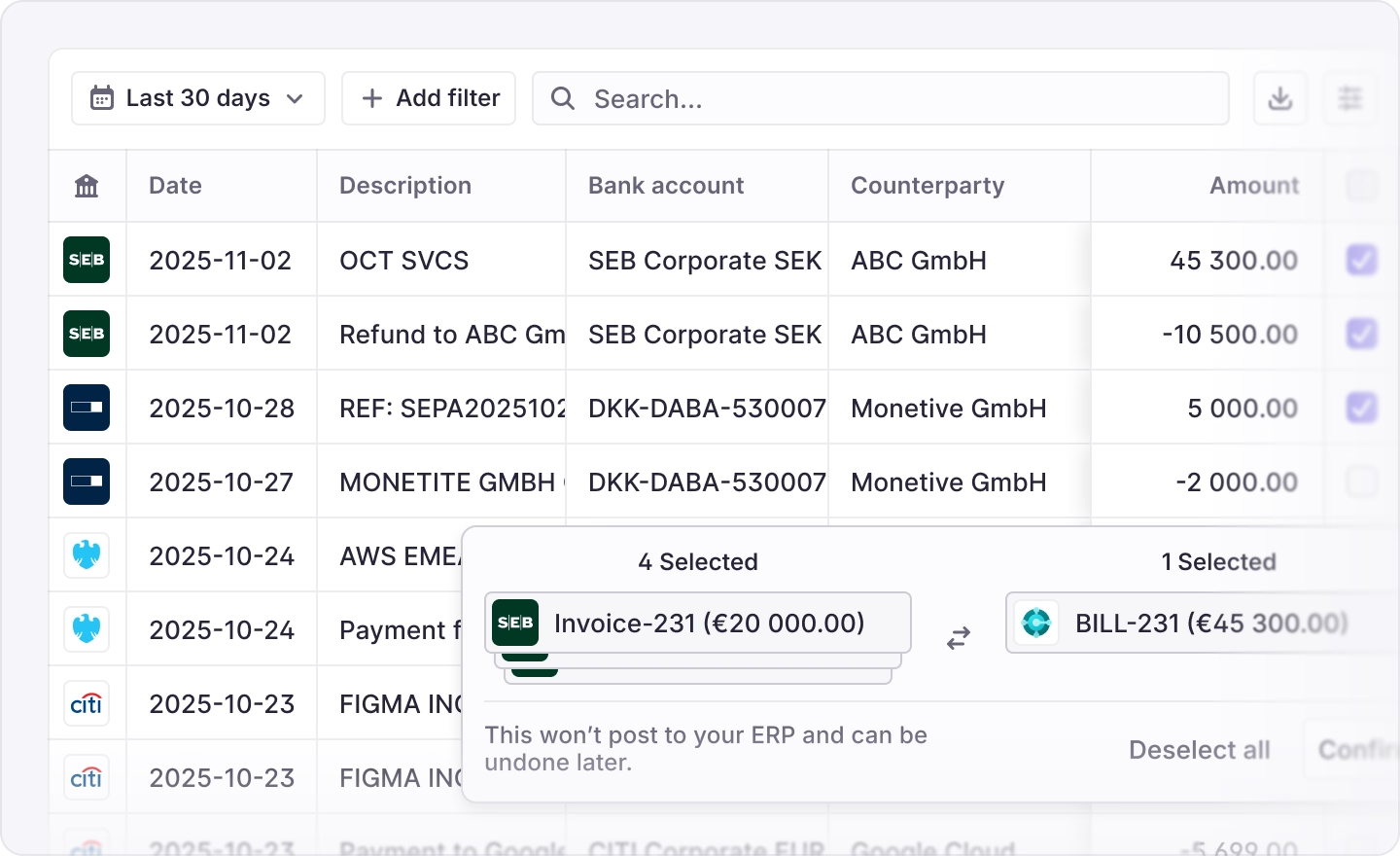
Atlar combines configurable rules with AI-powered search that finds matches rules would miss. Straightforward transactions clear automatically. Complex scenarios (partial payments, foreign exchange differences, one-to-many matches) are surfaced with suggested matches for review. Where matches require human judgment, the interface provides full context for quick resolution.
Natural language rules
Users can describe matching logic in plain language—"match payments from Acme where the amount is within 1% of the invoice total"—and the system translates this into structured rules. Over time, Atlar observes patterns in manual matches and suggests new rules based on recurring scenarios.
Native ERP integration
Integrations with NetSuite, Microsoft Dynamics 365, and SAP S/4HANA mean that matched transactions sync bidirectionally. Once approved by the user, matches can post automatically. Journal entries can be created when no corresponding accounting record exists.
Atlar customers have seen significant results from streamlining their reconciliation and payment workflows. Mondu, a B2B payments company, accelerated their month-end close with automated data flows into NetSuite. Beamery saves 480 hours annually across payment and reconciliation processes.
What to consider when evaluating AI reconciliation tools
Not all AI-powered reconciliation is equivalent. When assessing options, several questions are worth asking:
How does the system handle bank connectivity? If you're still manually downloading and uploading statements, much of the automation benefit disappears. Look for direct, maintained integrations with your banks—not just the ability to import files.
Does the AI learn from your corrections? A system that applies the same logic regardless of feedback is just rule-based matching with better marketing. Genuine AI reconciliation should improve over time as it observes your team's decisions.
How does it integrate with your ERP? Bidirectional sync—where matches post automatically and discrepancies create the right journal entries—eliminates manual re-entry. One-way integrations still leave work on the table.
What visibility do you have into matching decisions? For audit and control purposes, you need to understand why each match was made. Opaque matching logic creates compliance risk.
Can it handle your specific complexity? Multi-entity structures, intercompany reconciliation, multi-currency transactions, high-volume payment processors—these all create edge cases. Ask for specifics on how the system handles your particular scenarios.
Moving forward
For finance teams still reconciling in spreadsheets, or working around the limitations of semi-automated ERP matching, the gap between current practice and what's now possible continues to widen.
AI-powered bank reconciliation isn't about removing human judgment from the process. It's about focusing that judgment on exceptions that genuinely require attention, while routine transactions clear automatically with high accuracy.
The organizations adopting this approach are closing faster, catching discrepancies earlier, and redirecting time from mechanical matching to strategic work. The spreadsheet served its purpose. For modern finance teams managing complexity at scale, there are better options.
Ready to see AI-powered bank reconciliation in practice? Explore Atlar’s reconciliation capabilities or request a demo.
_NEF-EDIT.avif)