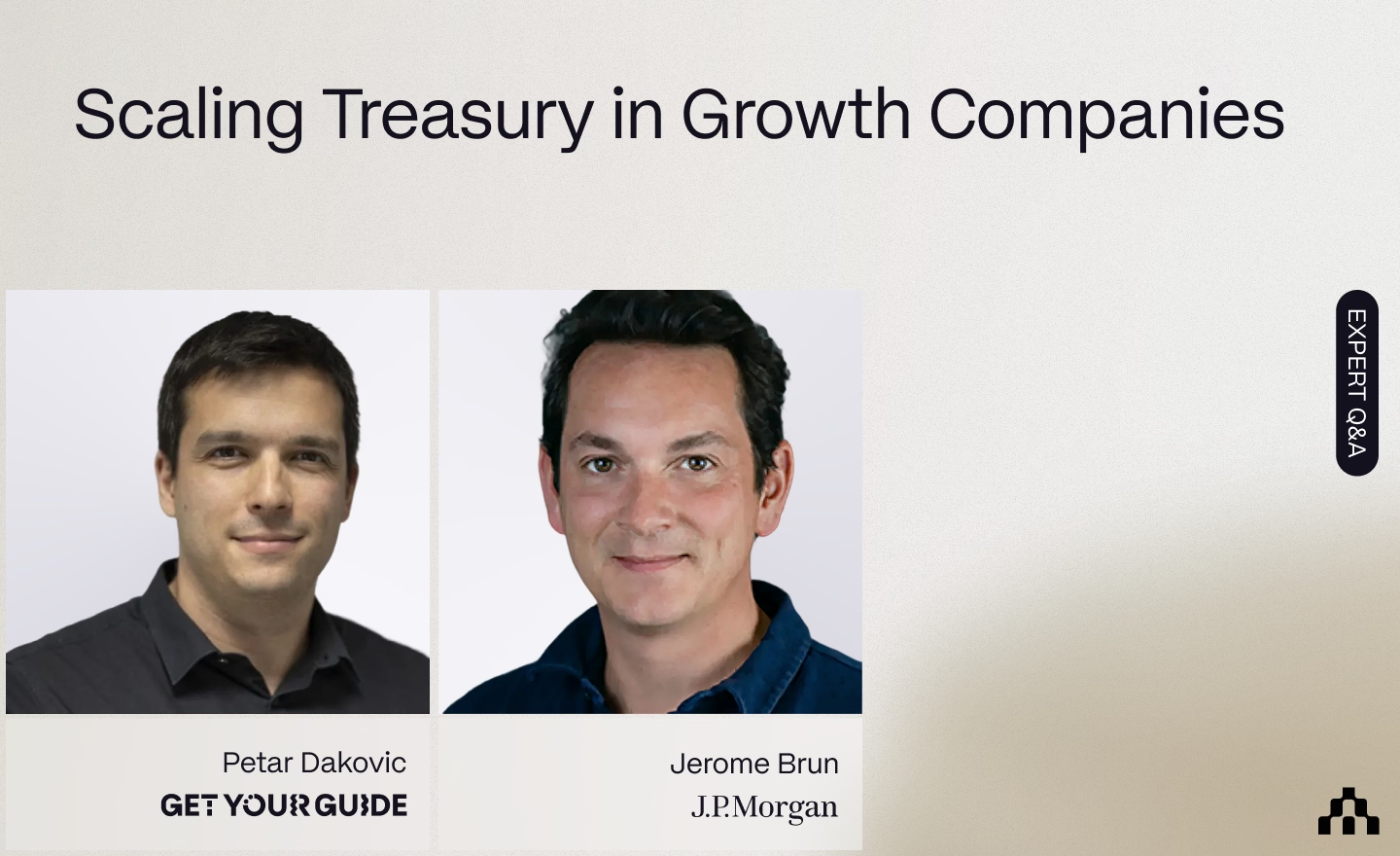
Scaling Treasury in Growth Companies: Lessons from GetYourGuide and J.P. Morgan
Growth is usually good news for a business. For treasury, it can quietly become a stress test.
We spoke with Petar Dakovic, Senior Treasury Manager at GetYourGuide, and Jerome Brun, Executive Director, Advisory at J.P. Morgan, about when to invest in treasury, how to prioritize what to fix, and what a "minimum viable" setup looks like in practice. This post is adapted from a recent webinar—watch the full conversation here.
From manual work to strategic treasury
When Petar joined GetYourGuide, the treasury setup looked like many fast-growing companies: small team, many banks, plenty of manual work.
"The team was only one to two persons, logging into different e-banking portals, downloading account statements and smashing everything into Excel just to determine a cash position after lengthy hours."
Then volumes surged. "We realized that with this pace we wouldn't be able to support the scale we wanted to achieve."
This is a familiar story. Treasury's role becomes strategic: managing liquidity across entities, supporting international expansion, enabling faster decisions. But the infrastructure remains tactical. Spreadsheets, manual reconciliation, fragmented bank portals. The mismatch creates drag on the entire finance function.
That tension prompted GetYourGuide's move to Atlar. Today, they have 12 global banks and PSPs connected via real-time APIs, saving over 10 hours per month just by eliminating manual logins and file transfers. Cash reporting for internal stakeholders is automated, with custom dashboards delivering clear liquidity insights. Read the full case study.
For Petar, bringing PSPs and banks into a single view was a key differentiator. Most traditional treasury management systems focus only on bank accounts, leaving digital wallets and payment platforms as a blind spot.
When to invest in treasury tech
The trigger isn't a specific headcount or revenue threshold. It's when complexity starts outpacing your ability to maintain control.
Two situations tend to force the issue. The first is expanding your banking relationships: "You don't want to log in and log off from five, six, seven different online bankings," as Jerome puts it. The second is geographic expansion, which brings regulatory complexity and currency risk. "Complexity doesn't only arise on cash—it can arise on currency, which is basically FX."
The rule of thumb: as soon as you feel you're losing control of cash, payments, or FX exposures, treasury tech becomes a necessity, not a nice-to-have. Many companies wait until the pain is acute—but by then, you're fixing problems rather than preventing them.
What to fix first
Ask five treasury professionals what to prioritize and you'll get five different answers. But there's a common thread: start with visibility and control, then layer in sophistication as you mature.
Cash positioning comes first. "If you don't have the ability to determine cash positioning quickly, you're going to see delays on all fronts," Petar explains. This is the foundation. Without accurate, timely visibility into your cash across entities, currencies, and geographies, everything else—forecasting, investment decisions, risk management—is built on shaky ground.
Control should wrap around everything. Segregation of duties, approval workflows, audit trails. "We are living in a world with more and more threats, cyber attacks and so forth," Jerome notes. "Control is critical." This isn't just about compliance; it's about protecting the firm from operational risk and fraud.
Investing excess cash comes next for cash-positive companies. Once you can see your cash clearly, the question becomes what to do with it. "How can you invest quickly with reasonable returns, probably a bit conservative in terms of risk appetite, but still putting that money to work?"
FX risk often gets underestimated. "I've seen many companies expanding and taking hits on margins because FX was not properly managed," Jerome warns. "There's nothing more frustrating than thinking you're doing everything right and then being told you've got an FX loss." For companies operating across currencies, this can quietly erode margins even when the core business is performing well.
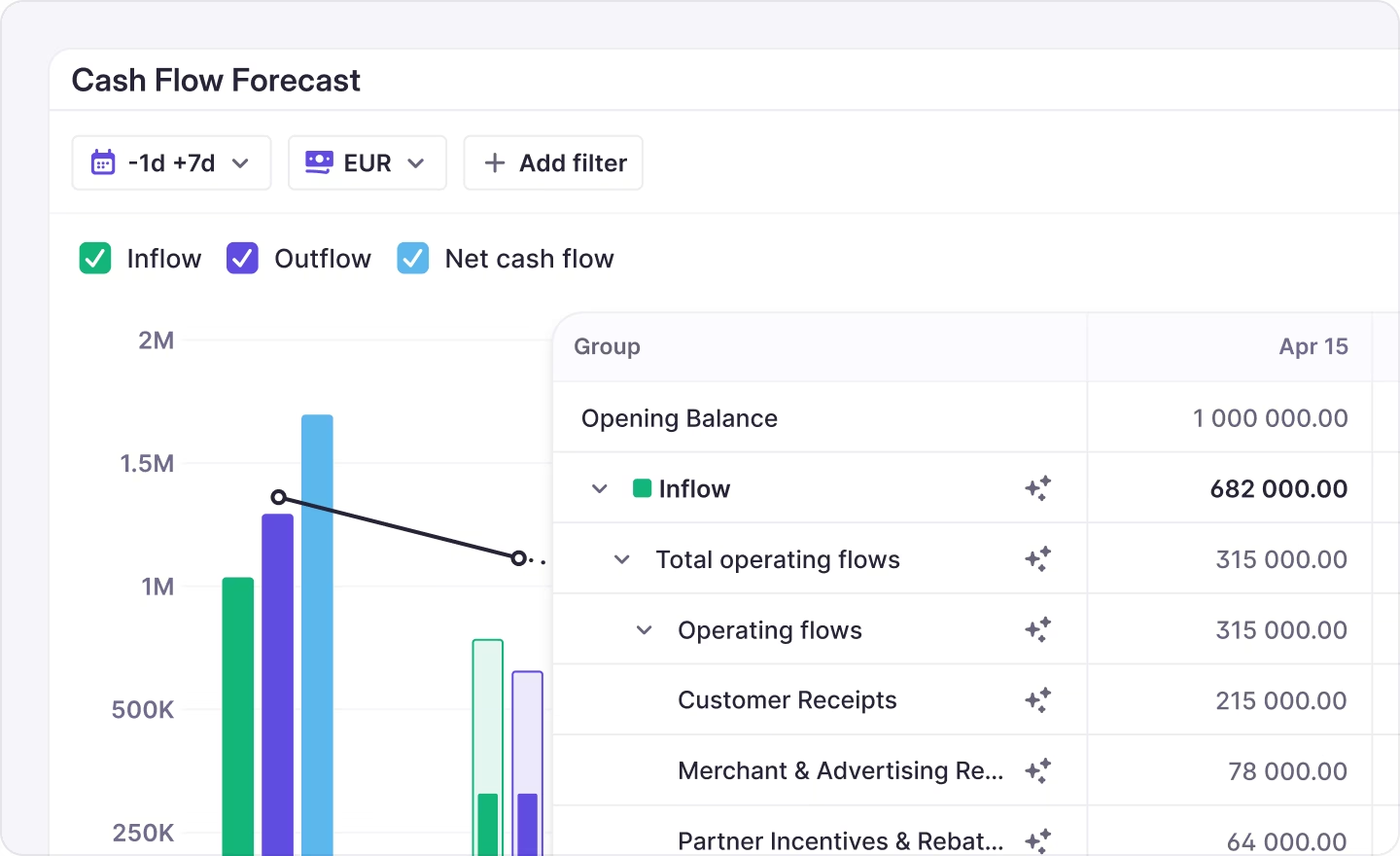
Forecasting matures over time. Short-term forecasting is essential from the start, but more sophisticated mid- and long-term forecasting typically develops as the company matures. "That would entail connectivity to your ERP to pull data from accounts receivable and accounts payable, and layer that with additional cash flows."
The instinct to start with sophisticated forecasting or complex hedging programs is understandable, but often premature. Get the fundamentals right first.
Building the business case
A common challenge: you know treasury needs investment, but your CFO isn't convinced.
The trick is to flip the logic. Rather than building a case for what treasury could do, quantify the cost of not having it: missed investment returns on idle cash, FX losses hitting margins, operational risk from weak controls or late payments.
"Business cases for treasury are not always easy," Jerome acknowledges. "One way is to look at the cost of not having treasury. The second is to see where there are missed opportunities."
And before the business case comes education. "CFOs are CFOs. They were not always born in treasury. It's your job to explain what treasury is about and what treasury is not about." Treasury isn't a back-office function to be minimized—it's a strategic capability that protects and optimizes the firm's financial position.
What a minimum viable treasury looks like
For a 300–500 person company expanding internationally, you don't need a big team—but you do need structure.
Three people is typically the minimum for global expansion: enough for segregation of duties and backup coverage. Beyond headcount, the emphasis should be on simplicity. "You can be lean and still effective if you keep it simple."
The checklist:
- Define the purpose of treasury in your business.
- Set a clear strategy (central vs. local, who owns what).
- Put policies in place to protect the firm.
- Keep liquidity structures, hedging, and technology as simple as possible.
- Learn from other treasurers who have already been through the journey.
Key takeaways
- Start with visibility and control, not sophistication.
- Complexity and loss of control are the real triggers to invest in treasury tech.
- Treasury's value needs to be clearly articulated to the CFO and the wider business.
- Simplicity scales better than complexity in growth environments.
You don't need a giant team to have a professional treasury. You need a small team, the right mindset, robust processes, and technology that gives you real-time visibility and control as you grow.
Want the full story of how GetYourGuide rebuilt their treasury for scale? Read the case study.

_NEF-EDIT.avif)