Key takeaways
- Switzerland’s currency is the Swiss franc (CHF); the Swiss National Bank is settlement agent, and IBANs are 21 characters, including a five-digit Swiss Bank Clearing Number.
- In 2021 cashless payments surpassed cash for the first time; retail payments are dominated by cash, cards, invoices, and TWINT, while direct debits are only about 4% of billing compared with roughly half in Germany.
- Legacy payment slips were replaced by the QR-bill in October 2022; SIX Group operates Swiss Interbank Clearing (SIC) on behalf of the SNB as a real-time gross settlement system for high-value and retail CHF payments.
- Switzerland has been a SEPA member since 2015 and Swiss banks have supported SCT since 2008 with availability close to 100%, but only a handful support SDD Core or SDD B2B.
- Domestic schemes require CHF or euro payments between accounts domiciled in Switzerland; consumer online-banking payments are typically free, with fees often bundled into other bank services rather than charged per transaction.
With its strong banking tradition, Switzerland is an international financial hub with a unique domestic payments landscape, one that has recently been modernized with the introduction of Swiss instant payments.
Key facts
- Currency: Swiss franc (SFr.)
- ISO currency code: CHF
- ISO country code: CH
- IBAN example: CH93 0076 2011 6238 5295 7
- Key local schemes: TWINT, LSV+, Business Direct Debit, PostFinance, eBill Direct Debit
- Settlement agent: Swiss National Bank
Payment infrastructure
Switzerland has traditionally been more cash-centric than its European neighbours but, like elsewhere in Europe, cash usage is now steadily declining. In 2021, the number of cashless payments surpassed that of cash payments for the first time. Switzerland's retail payments landscape is dominated by cash, card payments, invoice payments, and the mobile payment method TWINT.
Swiss Post, the national postal service, has historically dominated Switzerland's payment services and started offering accounts to any firm or private individual as early as 1906. Traditionally, Swiss consumers paid their bills in cash at a local post office using the standardized payment slip attached to each bill. These legacy payment slips were replaced by the QR-bill in October 2022, which features a QR code containing all payment information. Today, most consumers use an electronic bill (e-bill) scheme or manually enter the payment information in their online banking portal.
As a result, the billing culture in Switzerland is based mainly on credit transfers. Debit instruments like cheques and direct debits have never been widely used: only around 4% of all billing is done using direct debits today, unlike Germany where direct debits account for roughly half of all bill payments. This helps to explain why the overwhelming majority of bank payments in Switzerland take the form of credit transfers.
Swiss banks and PostFinance, the financial services arm of Swiss Post, have been participating in the SEPA Credit Transfer (SCT) scheme since it was introduced in 2008. This means customers can use credit transfers for domestic and cross-border payments in euros through the SCT scheme, as well as through domestic credit transfer system in Swiss francs. Switzerland became a member of the SEPA zone in 2015.
Typically payment services in Switzerland are not charged on a per-transaction basis but are bundled and priced together with other bank services. For consumers, payments made using online banking are typically free of charge.
Bank account numbers in Switzerland
- IBAN format: CHDD AAAA AYYY YYYY YYYY Y
- Country code: CH
- Check digits (D): 93
- Bank code example (A): 00762
- Account number example (Y): 0116 2385 2957
- IBAN example: CH93 0076 2011 6238 5295 7
The use of traditional Swiss bank account numbers and bank addresses has been in decline since the introduction of euro-denominated SEPA credit transfers in 2008, which require an International Bank Account Number (IBAN). The majority of credit transfers in Swiss francs now also use an IBAN, and Swiss banks assign an IBAN to each of their customer accounts.
In Switzerland, IBANs consist of 21 characters and are formatted as CHDD AAAA AYYY YYYY Y. The first four characters include the ISO country code and check digits (D), used for validation purposes. The following five digits are the bank code or identifier (A), known as the Swiss Bank Clearing Number (BCN). The remaining twelve digits represent the actual account number.
Clearing and settlement
In 2008, three Swiss financial infrastructure providers merged to form SIX Group, an entity owned by over 150 domestic and foreign banks that today provides most of Switzerland's financial infrastructure services. SIX Group owns and operates Swiss Interbank Clearing (SIC), Switzerland's central electronic payment system.
SIC is used by Swiss banks to settle both high-value transactions and retail payments in Swiss francs. Despite including the word 'clearing' in its name, SIC is in fact a payment system providing final settlement for payments in real time and on a gross basis. SIC is operated by SIX Group on behalf of the Swiss National Bank (SNB), which in turn acts as the settlement agent.
PostFinance, the financial services unit of Swiss Post, was founded in 1906 and remains a key provider of payment services in Switzerland despite not holding a banking license. Historically, PostFinance settled most transactions through its own network and payment system. Between 2017 and 2021, though, PostFinance integrated its bilateral payment system with that of SIC in order to streamline payment processing in Switzerland.
Switzerland uses the Swiss franc, not the euro, but its domestic credit transfer scheme accepts payments in both Swiss francs and euros. In order to use Switzerland's domestic schemes, payments must be sent in Swiss francs or euros between accounts domiciled in Switzerland. If you're interested in recommendations for local or international banks with a Swiss branch, get in touch with us here.
Is Switzerland part of the SEPA zone?
Though it's not a member of the European Union or the European Economic Area (EEA), Switzerland has been a member of the Single Euro Payments Area (SEPA) since 2015. Payment instructions and banking transactions in Switzerland are therefore similar to other EU countries within the SEPA zone. SEPA transfers to Switzerland are usually free of charge, though some banks may charge additional fees and transfers may be subject to currency conversion fees.
Swiss banks have widely supported the SEPA Credit Transfer (SCT) scheme since it was introduced in 2008 and its availability today is close to 100%. The situation is different for direct debits, though. Today only a handful of Swiss banks support either of the SEPA direct debit schemes: Direct Debit Core (SDD Core) and Direct Debit B2B (SDD B2B). This is partly because direct debits are not widely used in Switzerland in general.
In addition, it's worth noting that Switzerland and Liechtenstein have been part of a common economic and monetary area since 1923. The Swiss franc serves as the official currency for both countries.
Payment methods in Switzerland
In Switzerland, various payment types are available for use by individuals and businesses. Credit transfers are the predominant instrument for cashless payments and account for the vast majority of payment volume, largely because Swiss consumers are accustomed to paying all types of bills using credit transfers and debit instruments have never been widely promoted.
Credit transfers
Swiss banks and PostFinance have participated in the SEPA Credit Transfer scheme since January 2008, enabling customers to execute domestic and cross-border SEPA payments in euros.
As for the Swiss domestic credit transfer scheme, payments can be made in both Swiss francs and euros. It is not possible to specify the desired processing time or urgency of the credit transfer, it may take a couple of hours, a day, or even longer depending on when the payment was initiated. For faster settlement, Swiss banks now support instant payments (see below).
Instant payments
Switzerland introduced instant payments in August 2024 with the launch of SIC5, an expansion of the country's central payment infrastructure developed by the Swiss National Bank and SIX Interbank Clearing. SIC5 enables the settlement of payments in Swiss francs in real time.
Transactions are processed in less than ten seconds, 24/7, 365 days a year, with funds made available to the recipient immediately. This brings Switzerland in line with instant payment schemes in other European countries.
Approximately 50 of the largest Swiss banks, representing around 95% of payment volume, supported instant payments at launch. All other banks are required to follow suit by November 2026.
E-billing
Many Swiss consumers use an electronic bill (e-bill) service to pay their bills, also known as e-invoicing, with the payment executed as a credit transfer. Both PostFinance and SIX Group offer e-bill services that allow customers to receive bills electronically, provided that the biller has registered with the e-bill platform.
Unlike direct debits, the customer needs to take action to pay each e-bill and can also change the due date or the amount of the bill. E-billing has grown in popularity in Switzerland since the early 2000s, leading to a decline in both the value and volume of direct debits.
TWINT
Next to more traditional payment methods, TWINT is a widely-used digital wallet in Switzerland that enables users to make payments with their smartphones through a mobile app. The app has achieved significant adoption, with over 80% of physical stores and 84% of online shops in the country offering it as a payment method.
With over 6 million active users, TWINT is used by over two-thirds of the Swiss population. Currently, payments can only be made in Swiss francs and are limited to businesses and shops within Switzerland.
Direct debits
Direct debits are typically reserved for recurring payments of variable amounts, such as credit card bills and some utility bills. SIX Group offers two direct debit schemes, LSV+ and Business Direct Debit, for private and business customers respectively. PostFinance offers its own scheme, Swiss Direct Debit (CH-DD), which can be used by both private and business customers. Both the SIX Group and PostFinance systems can be used to settle recurring payments in Swiss francs or euros.
LSV+
The 'Lastschrift Verfahren' or LSV+ direct debit scheme is intended for businesses that frequently collect payments from consumers in Swiss francs or euros, accommodating both varying and fixed amounts. Unlike Business Direct Debit, it incorporates a right of objection for customers.
To set up an LSV+ direct debit, the debtor is required to complete a debit authorization. Creditors can submit direct debits electronically through an interface such as their online banking portal or to SIX Interbank Clearing directly.
Outstanding bills in the creditor's accounts receivable remain open until the direct debit is paid, and reconciliation occurs automatically based on the reference number provided. Some common use cases for LSV+ include utility payments, insurance premiums, and subscription services.
Debtors can object to a direct debit payment without giving a reason within 30 calendar days after debiting their account. Each transaction must have a unique reference number to ensure proper incoming payment allocation to open accounts receivable entries.
Business Direct Debit
Business Direct Debit (BDD) is a direct debit scheme designed explicitly for transactions without the right of objection. It caters to companies that predominantly collect large payments in Swiss francs or euros from their business customers, frequently following the delivery-versus-payment principle.
As with an LSV+ direct debit, the debtor must provide a debit authorization in advance and creditors can submit direct debits electronically either via online banking or to SIX Interbank Clearing directly.
Swiss Direct Debit
Swiss Direct Debit (CH-DD) is a direct debit scheme offered by PostFinance with two distinct standards aimed at collecting recurring payments from consumers and businesses respectively: Core Direct Debit, or Swiss COR1 Direct Debit, and B2B Direct Debit.
A key difference between these two standards is the debtor's right of objection. Core Direct Debit grants debtors a 30-day objection period, while B2B Direct Debit does not provide any right of objection. Both standards allow for multiple retries in the event that a direct debit is not paid on the due date.
What's changing
Switzerland's payments landscape is undergoing several significant changes that businesses should be aware of.
Direct debits
SIX has announced that LSV+ and Business Direct Debit will be discontinued on September 30, 2028. Starting in 2026, banks will no longer activate new billers for these legacy schemes. PostFinance's Swiss Direct Debit (CH-DD) is not affected and will continue to operate.
As a replacement, eBill Direct Debit was introduced in mid-2025, offering a modernized approach to recurring payments that integrates with Switzerland's established e-billing infrastructure. Businesses currently using LSV+ or BDD should plan their migration to either eBill Direct Debit or CH-DD before the 2028 deadline.
Instant payments rollout
While instant payments are now live for Switzerland's largest banks, all remaining banks are required to support instant payments by November 2026. This will bring nationwide coverage for real-time CHF payments.
Cross-border instant payments
Looking further ahead, the Swiss National Bank and the European Central Bank have been exploring the possibility of linking Switzerland's SIC system with the Eurozone's TIPS (TARGET Instant Payment Settlement) infrastructure. If implemented, this would enable faster cross-currency instant payments between Switzerland and the euro area.
How Atlar can help
Building and maintaining direct bank connections in Switzerland is time-consuming and costly. Accessing real-time financial data and managing payments manually is little better, with teams often wasting hours each week navigating online banking portals and spreadsheets.
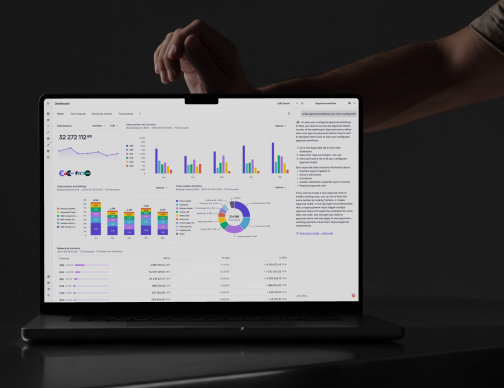
Atlar offers multi-bank connectivity to Swiss banks through a single platform, with support for Swiss domestic credit transfers in CHF and SEPA credit transfers in EUR. Finance teams can automate payment execution, track real-time balances, and monitor transactions across all accounts in one place.
With native support for ISO 20022 messaging and bank statement automation, Atlar helps businesses stay aligned with Switzerland's evolving payment infrastructure, including the rollout of instant payments and the transition away from legacy direct debit schemes.
Companies like Trustly use Atlar to manage treasury operations across 30+ banks and systems. As Switzerland's payments landscape continues to modernize, Atlar provides the connectivity and cash visibility to help businesses adapt.
Get in touch
If your company is looking to automate payments in Switzerland, or more easily access financial data from Swiss banks or PSPs, get in touch with our team to learn more about Atlar's payment and treasury capabilities. You can book a 30-minute demo here.